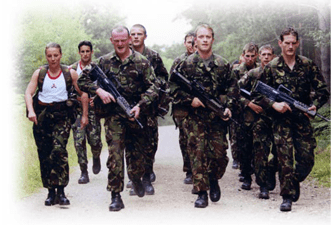
Occupational Heat Stress in Australian Workplaces: Heat Strain Greatest in Military-related Activities

Research Paper Title Occupational heat stress in Australian workplaces. Background The aim of this review was to summarise the current state of knowledge on heat stress risk within typical Australian occupational settings. Methods The researchers assessed identified occupations (mining, agriculture, construction, emergency services) for heat production and heat loss potential, and resultant levels of physiological… Read More
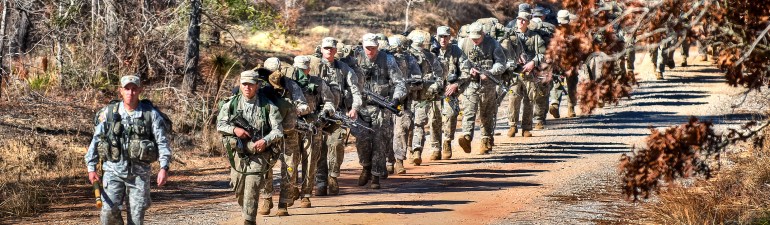

Does Adapting Marching Distances & Physical Training Decrease Recruits Injuries & Attrition?

Research Paper Title Adapted Marching Distances and Physical Training Decrease Recruits’ Injuries and Attrition Background There is evidence that progressive loading of physical demands at the beginning of basic military service and specific physical training can reduce injury incidences. Therefore, aim of this study was to measure the effects of a progressive increase in marching… Read More

Military Training: Load Carriage Performance & Reducing the Risk of Injury

Research Paper Title The effect of training on lumbar spine posture and intervertebral disc degeneration in active-duty [US] Marines. Background Military training aims to improve load carriage performance and reduce risk of injuries. Data describing the lumbar spine (LS) postural response to load carriage throughout training are limited. The researchers hypothesised that training would reduce… Read More

Biomechanics: Linking Load Carriage, Knee Joints & Run-to-Stop Manoeuvres

Research Paper Title Soldier-relevant body borne loads increase knee joint contact force during a run-to-stop manoeuvre. Background The purpose of this study was to understand the effects of load carriage on human performance, specifically during a run-to-stop (RTS) task. Methods Using OpenSim analysis tools, knee joint contact force, grounds reaction force, leg stiffness and lower… Read More

Load Carriage & Extreme Environments

Research Paper Title Moving in Extreme Environments: Extreme Loading; Carriage versus Distance. Abstract This review addresses human capacity for movement in the context of extreme loading and with it the combined effects of metabolic, biomechanical and gravitational stress on the human body. This topic encompasses extreme duration, as occurs in ultra-endurance competitions (e.g. adventure racing… Read More

Is There Any Correlation between Physical Fitness Tests & Performance of Military Tasks?

Research Paper Title Correlations between Physical Fitness Tests & Performance of Military Tasks – A Systematic Review & Meta-Analyses. Purpose To help evaluate the Army Physical Fitness Test (APFT) and ensure a future test is associated with Soldiers’ performance of common physical job requirements, the USAPHC applied a Systematic Review (SR) methodology to identify and synthesize published… Read More

Physical Training for Loaded Marching Performance Among British Army Recruits.

Research Paper Title Physical Training for Loaded Marching Performance Among British Army Recruits. Abstract Study 1 quantified the validity and repeatability of an automated on-line (ON) gas analysis system during sub-maximal loaded marching (LM) against that of the Douglas Bag (DB) approach. The 95% ratio Limits of Agreement (LoA) revealed the ON system systematically overestimated V02 by -16%… Read More