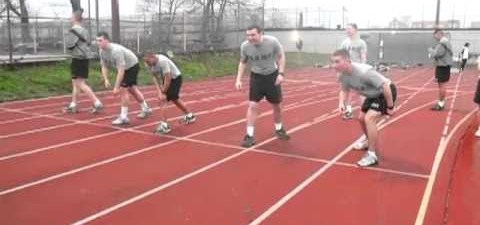
Outlining Military Human Performance Optimisation & Injury Prevention Strategies

Research Paper Title Military human performance optimization and injury prevention: Strategies for the 21st century warfighter. Abstract This special issue of the Journal of Science and Medicine in Sport is dedicated to the topic of optimising physical performance and reducing musculoskeletal injury. Effective military training should increase physical performance capabilities without incurring high rates of… Read More


Is Undercharging Killing Your Fitness Business?

There is one mistake that a number of businesses (especially fitness businesses) make that can be painful to watch. The business is going under or is broke because they are undercharging for their products and services – which can take many forms such as charging too little, poor packaging, and incorrectly structured margins to name a… Read More

Dealing with Gym-Hopper Clients

Everyone likes a bargain, and many fitness businesses choose to offer specials from time to time, to attract new clients. However, it can be frustrating if you are continually faced with bargain-obsessed clients who bounce between discount deals and special offers with different providers, rather than committing to a long-term investment in training with you.… Read More

Heat Acclimatisation: What is the Value of Short-term, Low-volume Training in the Operational Context?

Research Paper Title Short-Term, Low-Volume Training Improves Heat Acclimatization in an Operational Context. Background Personnel who travel to areas with a hot climate (WBGT > 27°C) may suffer from the heat (physiological strain, thermal discomfort, increased probability of heat illness), making them partially or fully inoperative. Performing physical activities during heat acclimatisation is known to… Read More

Training Transfer & Motivation to Learn: Supervisor’s have a Supporting Role

Research Paper Title Supervisor’s Role as an Antecedent of Training Transfer and Motivation to Learn in Training Programmes. Background Training and development programme literature highlights two major characteristics of a supervisor’s role: support and communication. The ability of supervisors to provide adequate support and practice good communication style in relation to training programmes may lead to… Read More