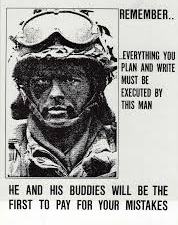
Military Organisation: Energy, Norms & Tempo

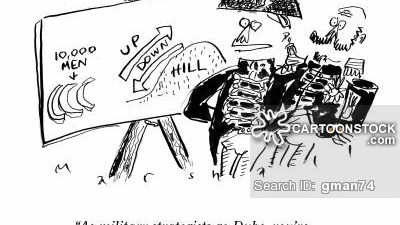
“If there is anyone in a key position who appears to be expending less than the energy that could properly be demanded of him, or who has no natural sense for practical problems of organisation, then that man must be be ruthlessly removed. A commander must accustom his staff to a high tempo from the… Read More

Military Organisation: Supplies & Quartermasters

“If quartermasters and civilian officials are left to take their own time over organisation of supplies, everything is bound to be very slow. Quartermasters often tend to work by theory and base all their calculations on precedent, being satisfied if their performance comes up to the standard which this sets. This can lead to frightful… Read More

Military Officers: Confidence, Competence, Arrogance & Judgement

“Perhaps he had exceeded the measure of confidence that was innate to his nature. That was what ultimately separated the lesser officers from the best, Cato had come to learn. Confidence was the source of competence. Arrogance might also help a man, but it was a brittle quality and founded on delusion rather than good… Read More

Officers: Good versus Bad…

“The difference between a good officer and a poor one,” said Burke, “is about ten seconds.“ (Potter, 2005, p.73). Arleigh Albert ‘31-knot’ Burke (1901-1996) US Navy Admiral who took part in WW2 and Korea. Reference Potter, E. B. (2005) Admiral Arleigh Burke. Annapolis, Maryland: US Naval Institute Press.

Initial Officer Training & Education: 1 vs 3 Years, Britain & Sweden

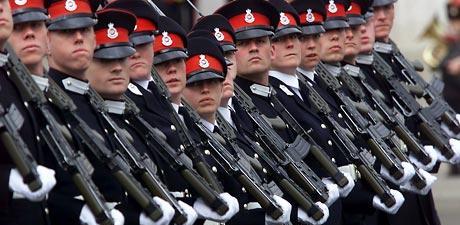
Research Paper Title Initial Officer Training and Education in the British Army. Abstract Nations, their armed forces and the organisations, structures and processes which their armed forces employ all differ. They may have similarities: for example, all armies tend to have corporals, captains and colonels. However, underneath such relatively superficial similarities, the differences may be significant. Those differences… Read More

Merit: The Person or their Title?

“I weigh the man, not his title; ‘tis not the king’s stampcan make the metal better or heavier.” William Wycherley (1640-1715) From his play ‘The Plain Dealer’, which is a Restoration comedy first performed on 11 December 1676, and is based on Molière’s Le Misanthrope.

First Female Commanders at the Royal Military Academy Sandhurst & West Point

British Army Officer Training The Royal Military Academy Sandhurst (RMAS), the British Army’s centre of excellence for the training of the British Army’s future generation of officers, has appointed its first female commander. Lieutenant Colonel Lucy Giles, of the Royal Logistics Corps (RLC), will take charge of New College. Lucy commissioned into the RLC from the… Read More