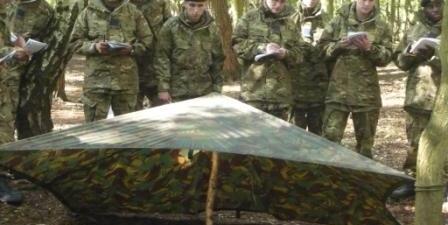
US Marine Corps Recruits & Pneumonia Burden

Research Paper Title Pneumonia at Marine Corps Recruit Depots: Current Trends in Ambulatory Encounters and Inpatient Discharges. Background Acute respiratory infections are recognised as a significant source of morbidity for military populations, particularly for recruits. This analysis aims to describe the pneumonia burden at Marine Corps Recruit Depots (MCRD) in Parris Island and San Diego… Read More
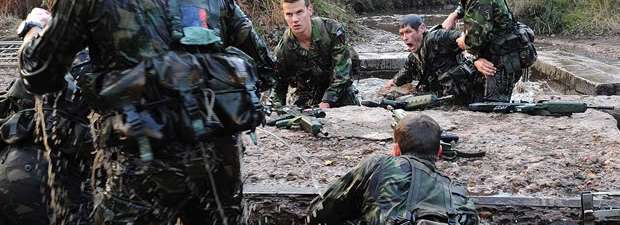
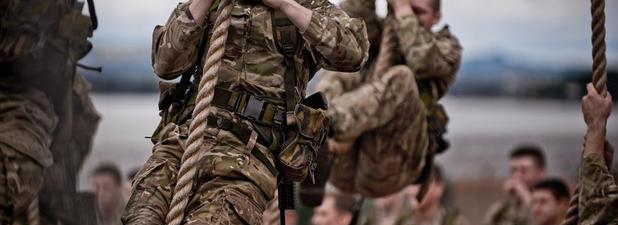
Streptococcus & Royal Marines Recruits

Research Paper Title Asymptomatic group: A Streptococcal throat carriage in Royal Marines recruits and Young Officers. Background A prospective observational study was conducted in Royal Marines (RM) recruits to investigate throat carriage of group A Streptococcus (GAS) and incidence of soft tissue infections. Methods 1,012 RM recruits were followed through a 32-week training programme, with… Read More

Royal Marines Commando Training: Incidence of Stress Fractures & Time to Return to Training

Research Paper Title Incidence and Time to Return to Training for Stress Fractures during Military Basic Training. Background Currently, little is known about the length of time required to rehabilitate patients from stress fractures and their return to preinjury level of physical activity. Previous studies have looked at the return to sport in athletes, in… Read More

Linking Swiss Army Basic Military Training Schools & the Impact of Training Patterns

Research Paper Title Impact of Training Patterns on Injury Incidences in 12 Swiss Army Basic Military Training Schools. Background Non-battle injury rates are a major health problem in the armed forces today. Injury rates are related to physical demands of daily military routine. The aim of this study is to investigate the impact of different… Read More

Does Adapting Marching Distances & Physical Training Decrease Recruits Injuries & Attrition?

Research Paper Title Adapted Marching Distances and Physical Training Decrease Recruits’ Injuries and Attrition Background There is evidence that progressive loading of physical demands at the beginning of basic military service and specific physical training can reduce injury incidences. Therefore, aim of this study was to measure the effects of a progressive increase in marching… Read More

Initial Military Training: Linking Polymorphisms, Bone Biomarkers, Calcium & Vitamin D

Research Paper Title Association Between Single Gene Polymorphisms and Bone Biomarkers and Response to Calcium and Vitamin D Supplementation in Young Adults Undergoing Military Training. Background Initial military training (IMT) is associated with increased stress fracture risk. Methods In prior studies, supplemental calcium (Ca) and vitamin D provided daily throughout IMT reduced stress fracture incidence,… Read More

Officers & Troops: Inevitable, Inadequately & Effectively

“We have verified the inevitable – that inadequately trained officers cannot train troops effectively.” Lieutenant General Lesley J. McNair (1883 to 1944) quoted in 1943 by Khan, McNair, Educator of an Army. McNair was a US Army officer who served during World War I and World War II. He was the ‘unsung architect of the US Army’… Read More