Bomb Destruction: Is There A Social Impact?

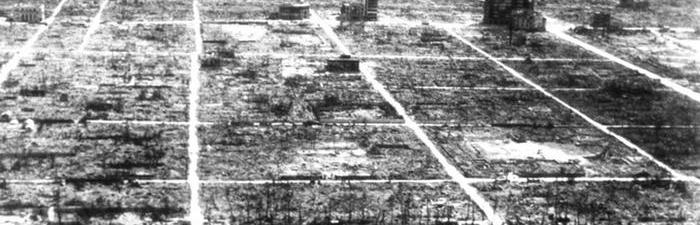
“In 1949, [Fred Charles] Ikle left his studies in Chicago and travelled through bombed-out Germany. The war hadn’t touched his family directly, and he wanted to know how people coped with devastation on such a massive scale. One of the cities he visited, Hamburg, had suffered roughly the same number of casualties as Nagasaki [target… Read More

Military Operations: Pursuing Utopia!

“Normally, there is no ideal solution to military problems; every course has its advantages and disadvantages. One must select that which seems best from the most varied aspects and then pursue it resolutely and accept the consequences. Any compromise is bad.” (Rommel, 1953, p.201). Field-Marshal Erwin Rommel (the Desert Fox), World War I junior officer… Read More

Military Gamble or Strategical/Tactical Boldness

“It is my experience that bold decisions give the best promise of success. But one must differentiate between strategical or tactical boldness and a military gamble. A bold operation is one in which success is not a certainty but which in case of failure leaves one with sufficient forces in hand to cope with whatever… Read More

Desert Warfare: Decisive Factors

“Given equal leadership, equal training, equal supply conditions and air force, the primary decisive factors in desert warfare are the number and manoeuvrability of the tanks and the range of their guns; after that comes the number of field-guns and their range; and then, finally, the number of anti-tank guns, their range and calibre. If… Read More

Tactical Tricks: Training for Dash & Caution

“The high casualties suffered by my assault forces were primarily caused by their lack of training. Even in the smallest action, there are always tactical tricks which can be used to save casualties, and these must be made known to the men. It frequently happened that dash was used where caution was really needed, with,… Read More

Military Organisation: Supplies & Quartermasters

“If quartermasters and civilian officials are left to take their own time over organisation of supplies, everything is bound to be very slow. Quartermasters often tend to work by theory and base all their calculations on precedent, being satisfied if their performance comes up to the standard which this sets. This can lead to frightful… Read More

German Officer Education in the Interwar Years

Research Paper Title German Officer Education in the Interwar Years. Abstract This dissertation is trying to discover some of the reasons why the Germans were so successful on the tactical level during World War II. Several factors contributed to this. The dissertation however, will limit itself to focussing on the human side of it. To be… Read More