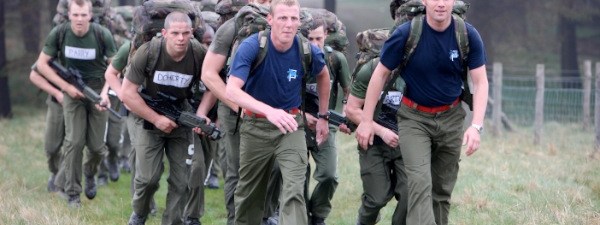
Is Greater Total Negative Energy Balance Associated with Declines in Lower-body Performance during Military Operations?

Research Paper Title Threshold of Energy Deficit and Lower-Body Performance Declines in Military Personnel: A Meta-Regression. Background Negative energy balance (EB) is common during military operations, diminishing body mass and physical performance. However, the magnitude of negative EB where performance would still be maintained is not well defined. The objective of the research was to… Read More

What are the Exercise Beliefs & Behaviours of Individuals with Joint Hypermobility Syndrome/Ehlers-Danlos Syndrome – Hypermobility Type?

Research Paper Title Exercise beliefs and behaviours of individuals with Joint Hypermobility syndrome/Ehlers-Danlos syndrome – hypermobility type. Background To explore exercise beliefs and behaviours of individuals with Joint Hypermobility syndrome/Ehlers-Danlos syndrome – hypermobility type and to explore patient experiences of physiotherapy. Methods A cross sectional questionnaire survey design was used to collect quantitative and qualitative… Read More

Medical Discharge due to Femorocetabular Impingement for the UK Armed Forces between 2008 and 2018

Between 01 April 2008 and 31 March 2018, there were 204 Regular personnel who had a read code for femorocetabular impingement (FAI) entered in to their primary care medical record (Information is recorded into the Defence Medical Information Capability Programme, DMICP, which is a centralised data warehouse of coded information). Of the 204 personnel, 38… Read More

Exercise & Recovery: Getting it Right

Introduction Sufficient rest and recovery is an important element of exercise and training that can ensure that your clients reap the desired adaptations from their training programmes. This brief article outlines how to monitor fatigue, assess recovery needs and the best recovery techniques to put in place. Regular, progressive, and challenging training is essential for clients to make improvements… Read More

Does Gender Influence Strength Training?

There are some differences between the genders that can influence training, although to what extent is debatable. Although studies have been conducted that examine the potential influence of the female hormonal cycle on adaptations from resistance training and/or injury risk, the results are inconclusive. In terms of anatomical differences, a larger quadriceps angle (‘Q angle’), or the angle… Read More

Is Muscle Fn14 Gene Expression Associated with Fat-Free Mass Retention during Energy Deficit at High Altitude?

Research Paper Title Muscle Fn14 gene expression is associated with fat-free mass retention during energy deficit at high altitude. Background Intramuscular factors that modulate fat-free mass (FFM) loss in lowlanders exposed to energy deficit during high-altitude (HA) sojourns remain unclear. Muscle inflammation may contribute to FFM loss at HA by inducing atrophy and inhibiting myogenesis… Read More

Squat Performance & Female Football Players

Research Paper Title Can Squat Jump Performance Differentiate Starters vs. Nonstarters in Division I Female Soccer Players? Background Although soccer is predominately an endurance sport, high velocity movements may be an important indicator of athletic success. The purpose of this investigation was to establish whether squat jumps (SJs) can differentiate starters from nonstarters with a… Read More