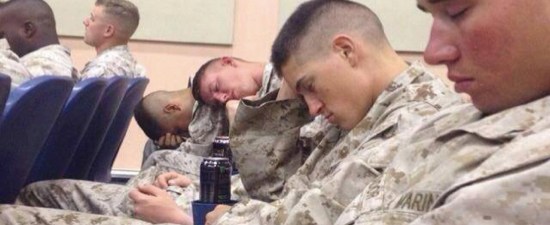
Linking Sleep & Deployment in US Naval Personnel

Research Paper Title Self-Reported Sleep During U.S. Navy Operations and the Impact of Deployment-Related Factors. Background Sleep disruption is a growing concern among military personnel. Very little is known, however, regarding sleep and associated factors in military members serving in combat environments. Methods The researchers sought to quantify the prevalence of sleep disruption among military… Read More

Reviewing Caffeine’s Effects on Cognitive, Physical & Occupational Performance (in Military Populations)

Research Paper Title A review of caffeine’s effects on cognitive, physical and occupational performance. Abstract Caffeine is consumed by over 80% of U.S. adults. This review examines the effects caffeine has on cognitive and physical function, since most real-world activities require complex decision making, motor processing and movement. Caffeine exerts its effects by blocking adenosine… Read More

Military Training: Sleep Deprivation & Immune Indices

Research Paper Title The effects of two nights of sleep deprivation with or without energy restriction on immune indices at rest and in response to cold exposure. Background The purpose of the study was to determine the effects of two nights of sleep deprivation with or without energy restriction on immune indices at rest and… Read More

Simulated Combat: The Effects of Sleep Loss, Heat, Dehydration & Undernutrition

Research Paper Title Severe Decrements in Cognition Function and Mood Induced by Sleep Loss, Heat, Dehydration, and Undernutrition during Simulated Combat. Background Military exercises generate high levels of stress to simulate combat, providing a unique opportunity to examine cognitive and physiologic responses of normal humans to acute stress. Methods Cognitive and physiologic markers of stress… Read More

Sleep Tied to Operational Performance

Most people know that the average person needs about eight hours of sleep per night, but did you know that sleep issues can have a direct link to operational performance? Recent studies suggest that many Soldiers are complaining about a lack of sleep. Consequences can include reduced alertness, memory deficits and slower information processing.  Lack… Read More

Research: Sleep, Food & Weight Gain

It takes just five consecutive days of inadequate sleep to increase food intake in excess of energy needs, leading to weight gain. Scientists found that average expenditure of energy per day increased by about 5% when participants were allowed to sleep for up to five hours, compared with a sleeping period of up to nine… Read More