
Policy to Improve England’s Diet has Failed, Study Finds

Evidence is scant that a voluntary agreement between the government and food manufacturers to improve eating habits has worked, a study has concluded (Knai et al., 2015). The food “responsibility deal” was launched by the coalition government in March 2011 as a key policy, aimed at improving public health by reducing the prevalence of obesity… Read More
East Europeans & Fruit & Vegetable Intake
When the border between East and West Germany was opened in 1989, liberated easterners crossed over keenly searching for new fruits. For a time they were referred to as Bananenleute. A recent survey across Poland, the Czech Republic, and Russia shows that even now consumption of fresh fruit and vegetables tends to fall the further east… Read More
Older People & Physical Activity

Older people are bombarded with advice to keep active. A cross sectional survey of 3499 Irish people aged 65 and over shows that nearly 70% of respondents manage at least 30 minutes a day of moderate intensity activity five days a week (Age and Ageing 2015, doi:10.1093/ageing/afv042). It also shows that the variables most strongly… Read More
Physiotherapists: Perceptions, Beliefs & Management of Back Pain
Research Paper Title The Influence of Perceptions and Beliefs of Civilian Physiotherapist Working for the Ministry of Defence in their Management of Back Pain: An Exploratory Study using Mixed Methods. Background There is a high prevalence of Lower Back Pain (LBP) within military populations. Physiotherapeutic management has a primary role for patient care, but there… Read More
Calories are…

Forward Surgery and Combat Hospitals: The Origins of the MASH
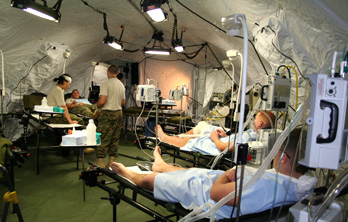
Did you know that the US Army adopted forward surgical hospitals (SHs) during World War I on the advice of the British and French armies. The purpose of these SHs were not just to save lives, but to benefit the military by returning more patients to duty and reducing the size of the hospital system… Read More

 Boot Camp & Military Fitness Institute