Thinking Soldiers…

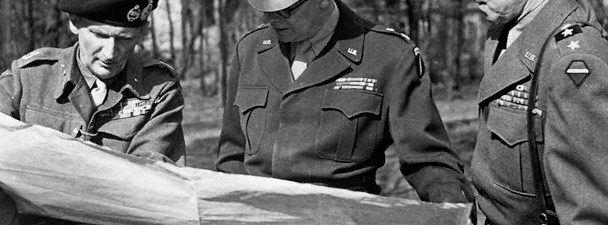
“If my soldiers were to begin to think, not one would remain in the ranks.” Frederick the Great (1712 to 1786) Frederick II, aka Frederick the Great, was the third King of Prussia (1740-86). Considered one of the great military captains, he was a brilliant military campaigner who, in a series of diplomatic stratagems and… Read More

Complexity, Dynamics & Circumstances…

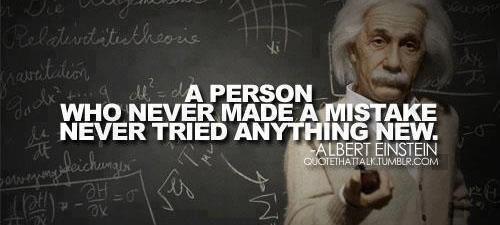
“Complexity (technical, organizational, operational, etc.) causes commanders and subordinates alike to be captured by their own internal dynamics or interaction – hence they cannot adapt to rapidly changing external (or even internal) circumstances.” Colonel John R. Boyd (1927-1997) A United States Air Force fighter pilot and Pentagon consultant of the late 20th century, whose theories… Read More

Mistakes versus Designs…

“I am more afraid of our own mistakes than of our enemies’ designs.” Pericles (Greek Statesman, Orator & General) in a speech to the Athenian Ecclesia I, 432 B.C. Reference Jowett, B. (1900) Pericles To The Athenian Ecclesia I. Thucydides: The Jowett Translation. Available from World Wide Web: http://www.classicpersuasion.org/pw/thucydides/thucydides-passages.php?pleaseget=1.140-1.144&passageid=Pericles%20To%20The%20Athenian%20Ecclesia%20I. [Accessed: 31 July, 2016].

Fighters: Controlled Rage versus Hatred

“What I will say is this: A fighter needs to think clearly, swiftly. His actions are always measured. Controlled rage is good, for it makes us stronger, but hatred swamps the emotions – it is like a runaway horse, fast but running aimlessly.” (Gemmell, 2014, p.35). Reference Gemmell, D. (2014) The Hawk Eternal. London: Orbit.

A Commander’s Battlefield Knowledge: Leading from the Front or In the Rear with the Gear?

“It is of the utmost importance to the commander to have a good knowledge of the battlefield and of his own and his enemy’s positions on the ground. It is often not a question of which of the opposing commanders is the higher qualified mentally, or which has the greater experience, but which of them… Read More

Battlefields: Speed & Surprise

“Rather than relying on defensive fortifications, he made brilliant use of speed and surprise on the battlefield, as well as perfecting siege warfare to such a degree that he ended the era of walled cities.” (Weatherford, 2004, p.xvii) Weatherford, J. (2004) Genghis Khan and the Making of the Modern World. New York, NY: Broadway Books.