Connecting Organisational Theory & Design and Irregular Warfare

Research Paper Title Reorganising for Irregular Warfare. Abstract A thorough understanding of Irregular Warfare (IW) and the principles of organisational theory and design will enable the Department of Defense (DoD) to organise efficiently and effectively for operations within the Irregular Warfare Environment, while maintaining its conventional capabilities. The researchers develop their argument for this thesis… Read More

A Most Disagreeable Ambush!

“Nothing concentrates the military mind so much as the discovery that you have walked into an ambush. Brigadier-General Robert Broadwood was confronted with this disagreeable news soon after dawn on 31 March.” (Pakenham, 2004, p.390). Reference Pakenham. T. (2004) The Boer War. London: Abacus.

Battlefield & Salient: The Hangman’s Noose!

“Now Hart knew enough about war to know that there are few more dangerous places to send men on a battlefield than into a salient – the open end of a loop. To march into a well-defended salient is like putting your head into a noose. There were many other choices open to him. […]… Read More

Offensive Strategy: Weak Points versus Strong Points

“True, Kruger’s plan was daring. He and Steyn had chosen attack as the best form of defence. But none of their pre-emptive blows was planned, as real offensive strategy demanded, to fall where the enemy was weakest. On the contrary, the aim was to find the strongest points in the enemy’s attacking force and then… Read More

Military Manuals: Never Read’em!

“In this commando system , it was no one’s job to to train the burghers. Apart from the annual wappenschauw (or shooting practice), the men were left to fight as they had always fought – with the tactics of the mounted frontiersmen. If the enemy were superior in numbers, they would provoke the enemy’s attack,… Read More

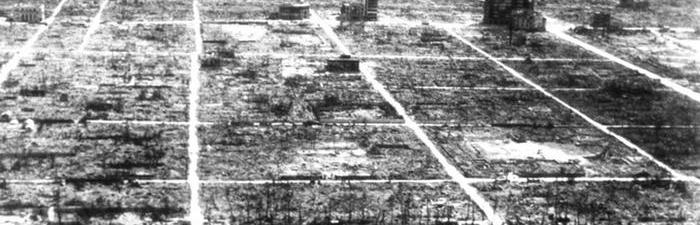
Aerial Bombing: What is the Tipping Point for the Civilian Population?

In a doctoral thesis, Ikle suggested that the proponents of airpower had overestimated the relationship between the intensity of aerial bombing and the density of a city’s surviving population. “Ikle was impressed by the amount of urban hardship and overcrowding that people could endure. But there were limits. The tipping point seemed to be reached… Read More