Resilience: Understanding the Drivers for Combat Medics

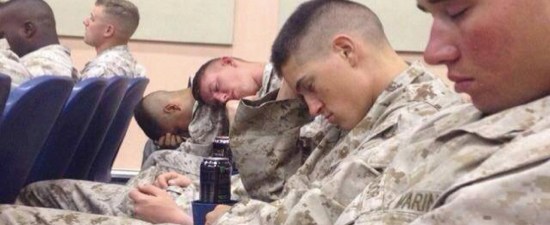
Research Paper Title Narrative approach in understanding the drivers for resilience of military combat medics. Background Qualitative insights may demonstrate how combat medics (CM) deal with stressors and identify how resilience can potentially develop. Yet, qualitative research is scant in comparison to the many quantitative studies of health outcomes associated with military service. Methods Semi-structured… Read More

Interval Training Variations

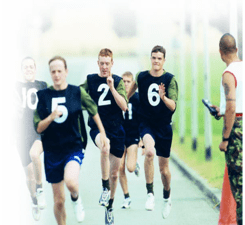
Manipulation of the interval training principles provides the opportunity for a wide variety of interval training sessions. Outlined below are some of the more commonly used variations: Individual Interval Training Options: Repeats: The same distance, done a set number of times. Repeats of 400 metres, one lap of the track, are the most common, but… Read More

What is Interval-Circuit Training?

“Introduced in the Scandinavian countries in the 1960s and 1970s, interval-circuit training combines interval training and circuit training into one workout.” (Kenney, Wilmore & Costill, 2012, p.223). The circuit may be 3,000 to 10,000 metres in length, with stations every 400 to 1,600 metres (437-1,750 yards). The individual jogs, runs, or sprints the distance between… Read More

Factors Associated with Injury at a US Army Hospital

Research Paper Title Factors Associated With Injury Among Employees at a U.S. Army Hospital. Background The purpose of this study was to investigate injury incidence and factors associated with injury among employees at a large U.S. Army hospital to inform injury prevention planning and health promotion education efforts. Methods Demographics, health behaviors, and injury history… Read More

What is the Copenhagen Method?

Another more recent interval training method follows the research of Gunnarsson and Bangsbo published in 2012, called the 10-20-30 Training Concept, more commonly known as the Copenhagen Method (Gunnarsson & Bangsbo, 2012). In this study, 18 moderately trained runners (6 females and 12 males) were divided into a high-intensity training (10-20-30) group and a control… Read More

Remembering Pier Diego Siccardi & the “Clinica del Lavoro” during WWI

Research Paper Title Pier Diego Siccardi (1880-1917) and the “Clinica del Lavoro” in the trench warfare. Background The year 2017 marks the centenary of the death of the Italian scientist Pier Diego Siccardi (1880-1917), one of Luigi Devoto’s assistants at the “Clinica del Lavoro” in Milan. Objective To commemorate Siccardi and to describe the activities… Read More