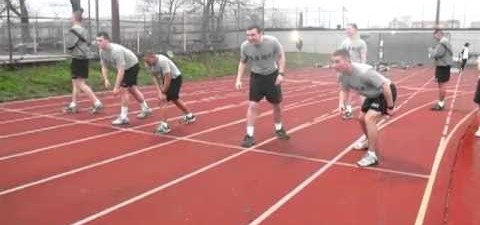
Are You A Non-Responder?

In 2012, Doctor Michael Mosley undertook a form of interval training, that came to be known as the Timmons Regime, as part of a BBC documentary ‘Horizon: The Truth About Exercise’ (Mosley, 2012). Jamie Timmons, professor of ageing biology at the University of Birmingham, is a proponent of a few short bursts of flat-out intensity.… Read More
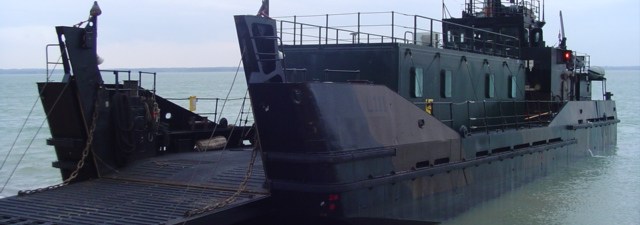
What is Establishment Strength in the RLC Mariner Trade & the Royal Navy Seaman Trade

Below is the number, by rank, of: Mariner trade (formerly seaman/navigator trade) in the Royal Logistics Corps (RLC); Seaman Specialistion in the Royal Navy (RN); and Coxswain trade (aka Landing Craft (LC) specialisation) in the Royal Marines (RM). Table 1: Number of personnel by branch of military service and rank [1] Rank (Army/RN/RM) RLC [2]… Read More

What is the Wingate Anaerobic Test?

Developed in the 1970s in Israel (Bar-Or, Dotan & Inbar, 1977), the Wingate Anaerobic Test (WAnT), also known as the Wingate Test and Wingate Protocol, measures (Bar-Or, 1987; Cooper et al., 2004): Lower-body peak power; Anaerobic capacity; and The reduction of power, known as fatigue index (FD). The WAnT, usually on a cycle ergometer, is… Read More

What is High-Intensity Interval Training (HIIT)?

“High intensity interval training (HIIT) involves repeatedly exercising at a high intensity for 30 seconds to several minutes, separated by 1-5 minutes of recovery (either no or low intensity exercise).” (Gibala & McGee, 2008, p.58). “HIIT generally involves alternating bouts of higher-intensity exercise (20 seconds to 5 minutes) sessions with either true rest or light-… Read More

A Unique Case? Group Behaviour in the Military

Research Paper Title Group behavior in the military may provide a unique case. Abstract The optimal functioning of male coalitionary behaviour in a military context may run contrary to some of the arguments about the importance of individual differentiation in Baumeister et al. Incentives become institutionally inverted within military contexts. Because the history of combat… Read More

What is the Tabata Method?

During the 1990s, Izumi Tabata and his colleagues published what is considered a landmark paper (Tabata et al., 1996). In their study using 14 physically fit, young, male subjects, Tabata and colleagues compared two training protocols, examining improvements in both aerobic and anaerobic fitness. In experiment one, seven subjects performed steady state exercise (moderate-intensity endurance… Read More