How Much Protein Should I Consume?

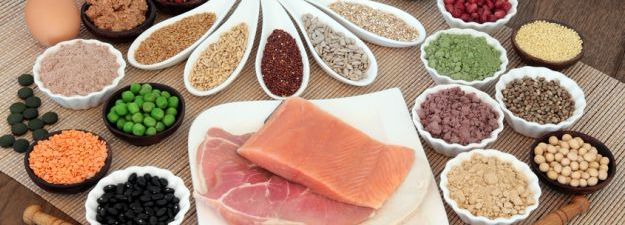
Protein is an essential macronutrient needed by the human body for growth and maintenance. Foods rich in animal protein are meat, fish, eggs, poultry, and dairy products, while plant foods high in protein are mainly legumes, nuts, and grains. With this in mind, what is the current recommended dietary allowance (RDA) for protein for an… Read More


Protein Supplementation & High-Intensity Resistance Training, Any Effect?

Research Paper Title Protein Supplementation to Augment the Effects of High Intensity Resistance Training in Untrained Middle-Aged Males: The Randomized Controlled PUSH Trial. Background High intensity (resistance exercise) training (HIT) defined as a “single set resistance exercise to muscular failure” is an efficient exercise method that allows people with low time budgets to realise an… Read More

Migratory Birds & Endurance Training…

Migratory birds are extraordinary endurance athletes – and their feats require some serious preparation. In the weeks before take-off, many undergo extreme physiological changes (Vernimmen, 2017). Most obviously, they load up on fats. In many cases, that means temporarily supersizing their digestive organs to ingest as much food as possible. Then, immediately before departure, they shrink their digestive organs to… Read More

What are the Effects of a Combined Protein & Antioxidant Supplement on Recovery of Muscle Function & Soreness following Eccentric Exercise?

Research Paper Title Effects of a combined protein and antioxidant supplement on recovery of muscle function and soreness following eccentric exercise Background An acute bout of eccentric contractions (ECC) cause muscle fiber damage, inflammation, impaired muscle function (MF) and muscle soreness (MS). Individually, protein (PRO) and antioxidant (AO) supplementation may improve some aspects of recovery… Read More

What is the Molecular Basis for Vitamin A Uptake & Storage in Vertebrates?

Research Paper Title Molecular Basis for Vitamin A Uptake and Storage in Vertebrates. Abstract The ability to store and distribute vitamin A inside the body is the main evolutionary adaptation that allows vertebrates to maintain retinoid functions during nutritional deficiencies and to acquire new metabolic pathways enabling light-independent production of 11-cis retinoids. These processes greatly… Read More