The Biomechanics of Lifting & Carrying Objects

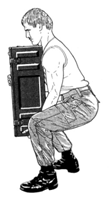
Common advice for individuals lifting objects from a standing position includes “keep the back straight” and “lift with the legs.” As a fitness professional, what if your client was to ask for an explanation of this advice? Is this advice correct from a biomechanical perspective? Figure A shows an incorrect method of lifting an object… Read More

Knee Pain & Injuries

The knee is a frequently injured joint, with its ligaments, menisci (a thin fibrous cartilage between the surfaces of some joints), and patellofemoral (knee) joint vulnerable to acute and repetitive use damage. Most knee injuries require exercise training for rehabilitation, and some require surgery as well. Predisposing factors to knee injury include the following: Lower… Read More

Can a Shoulder Problem/Injury Be Caused by your Feet?

Ankles and feet are responsible for weight bearing and ambulation (aka walking). Proper function and mechanics of ankles and feet are essential for most sports activities and performance of activities of daily living. Slight abnormalities in the feet and ankles (e.g. muscular imbalance, proprioceptive dysfunction, and structural changes) are transmitted via the kinetic chain to… Read More

Low Back Pain (LBP)

Low back pain (LBP) is one of the leading causes of disability and consistently ranks as one of the top reasons for visiting a medical professional. It has been estimated the LBP affects 60% to 80% of the general population at some point during their lifetime, and 20% to 30% suffer from this disorder at… Read More

What Causes the ‘Sticking Point’ During a Lift?

Let’s imagine a woman is performing a common bicep curl with a barbell. After several repetitions of the exercise, she notices that the barbell seems to be heavier, and the exercise more difficult at the 90° elbow angle position than at any other position in the ROM (range of motion). She has heard the term… Read More

Making a Comparison of Training Routines

A new client found two strength training routines in a popular training magazine and asks which he should implement. He states that his goal is to find the routine that provides the greatest total training volume in his designated training time. The two training routines he presents are a strength training routine, which includes the… Read More

HR Advice: Severe Weather FAQs

What should I do if I am unable to come to work? You should follow normal absence reporting procedures and, depending on your circumstances, discuss with your line manager alternative working arrangements, such as: Working from home; Working from an alternative work-place; Changing your work pattern; Leave; or Working back the time. What leave is… Read More