Staying In Top Shape after Retirement

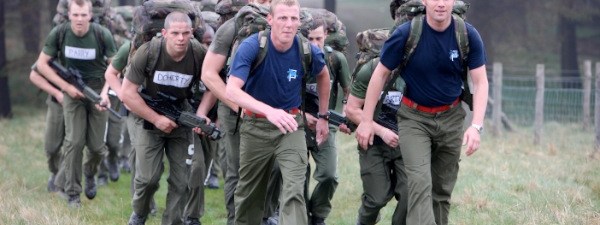
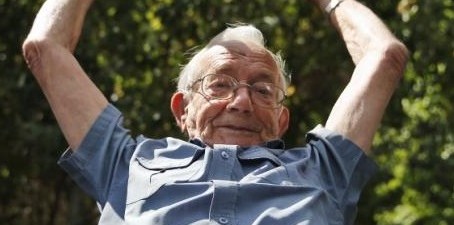
A military career often comes with a rigid and invigorating physical exercise regime. As the guardians of your nation’s safety and freedom, you always want to be in the best possible shape. But, as you reach retirement age, it can be tough to keep to the same schedule as you may have had when you… Read More

Want to Walk Faster – You Just Need a Little Stimulation!

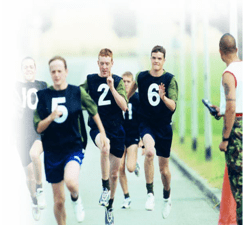
According to recent research, mild electrical stimulation can make us walk more quickly. When we move, hairs in our inner ears detect changes in speed and feed this information back to the brain, improving our balance. Shinichi Iwasaki at the University of Tokyo, Japan, and his colleagues have found that electrical stimulation may enhance this, prompting people… Read More

Human Locomotion: Springs, Muscles & Walking/Running

Research Paper Title Bipedal walking and running with spring-like biarticular muscles. Abstract Compliant elements in the leg musculoskeletal system appear to be important not only for running but also for walking in human locomotion as shown in the energetics and kinematics studies of spring mass model. While the spring-mass model assumes a whole leg as a linear… Read More

Linking Attention, Walking & Mobile Phones

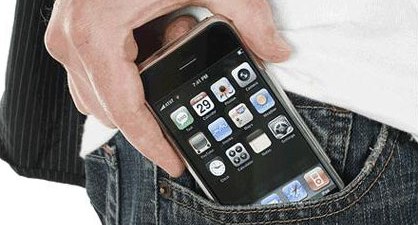
Cell phones are making people walk differently. A study that tracked how 21 people negotiated an obstacle and a step, without a phone or while texting, reading the screen, or making a call, found that using a phone made people walk slower and in less of a straight path, particularly when texting (Timmis et al., 2017). Reference Timmis, M.A, Bijl,… Read More

What are the Effects of Dual-task & Walking Speed on Gait Variability in People with Chronic Ankle Instability (CAI)?

Research Paper Title Effects of dual-task and walking speed on gait variability in people with chronic ankle instability: a cross-sectional study. Background Recent evidence suggests that impaired central sensorimotor integration may contribute to deficits in movement control experienced by people with chronic ankle instability (CAI). This study compared the effects of dual-task and walking speed… Read More

Assessing the Validity of Kinetic-based Algorithms for Detecting Gait Events

Research Paper Title A comparison of kinematic-based gait event detection methods in a self-paced treadmill application. Background Kinematic-based algorithms for detecting gait events are efficient and useful in the absence of (reliable) kinetic data. However, the validity of these kinematic-based algorithms for self-paced treadmill walking is unknown, particularly given the influence of walking speed on… Read More

New Year’s Resolutions…

Happy New Year. OK, so today is the day when people make symbolic gestures to make a difference in their lives; aka New Year’s Resolutions. One of these gestures typically involves ‘improving my fitness’, and as a result there is a surge of ‘new members’ to the myriad of fitness providers during the month of… Read More