When was the Term ‘Aerobics’ Coined?

Until the late 1960s, the idea of exercising for good health and well-being was virtually non-existent. Then in 1968, Kenneth H. Cooper, a Major in the US  Air Force Medical Corps, published a global bestseller in which he coined the term ‘aerobics’ and explained that the more the human body moves, the better it performs.… Read More

The Active Lives Adult Survey Provides a Snapshot of England’s Activity Habits

The latest figures from the new format Active Lives Adult Survey, which replaced the Active People Survey (APS), show 27.7 million people (61.8%) of the 16+ population in England are active. In other words, they meet the Chief Medical Officer for England’s guidelines to do at least 150 minutes of moderate activity each week –… Read More

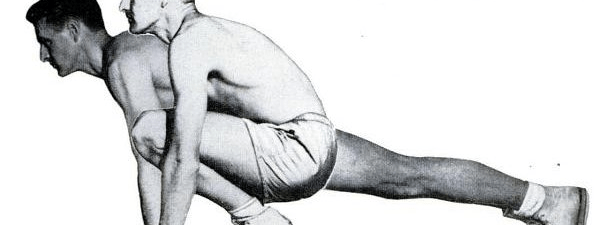
How Many Calories Does A Burpee Burn?

Burpees and Energy Expenditure The amount of energy expended (or calories burned per minute) varies according to: Your weight: The amount of calories burned by your body does not depend on your weight alone, since a higher bodyweight requires (relatively) more energy expenditure to move. Intensity of physical activity/exercise. Your metabolism. Your level of physical… Read More

Interval Training Variations

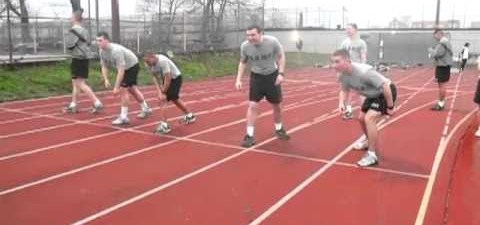
Manipulation of the interval training principles provides the opportunity for a wide variety of interval training sessions. Outlined below are some of the more commonly used variations: Individual Interval Training Options: Repeats: The same distance, done a set number of times. Repeats of 400 metres, one lap of the track, are the most common, but… Read More

Are You A Non-Responder?

In 2012, Doctor Michael Mosley undertook a form of interval training, that came to be known as the Timmons Regime, as part of a BBC documentary ‘Horizon: The Truth About Exercise’ (Mosley, 2012). Jamie Timmons, professor of ageing biology at the University of Birmingham, is a proponent of a few short bursts of flat-out intensity.… Read More

What is High-Intensity Interval Training (HIIT)?

“High intensity interval training (HIIT) involves repeatedly exercising at a high intensity for 30 seconds to several minutes, separated by 1-5 minutes of recovery (either no or low intensity exercise).” (Gibala & McGee, 2008, p.58). “HIIT generally involves alternating bouts of higher-intensity exercise (20 seconds to 5 minutes) sessions with either true rest or light-… Read More

Protein Supplementation & High-Intensity Resistance Training, Any Effect?

Research Paper Title Protein Supplementation to Augment the Effects of High Intensity Resistance Training in Untrained Middle-Aged Males: The Randomized Controlled PUSH Trial. Background High intensity (resistance exercise) training (HIT) defined as a “single set resistance exercise to muscular failure” is an efficient exercise method that allows people with low time budgets to realise an… Read More