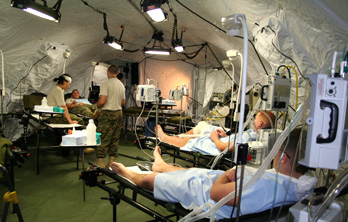
Combatants & Infection

“In several nineteenth-century battles, about 5 percent of the combatants contracted tetanus infections; of those, about 80 percent died. Approximately 5 percent of the wounded combatants in ancient wars contracted gangrene, another infection caused by bacteria in soil. Washing of the wound could reduce the incidence, and amputation might save an infected limb, but if the… Read More

The Roman Military Medical Service

“The Roman military had a medical system that was extraordinary for the ancient world. It was based on the teachings of Greek medicine and emphasized both prevention – maintenance of conditions for good public health – and healing of battle-wounded soldiers. A nutritious diet, a carefully monitored water supply, and strict rules about sanitation helped… Read More

Time for Another World War?

Since 1945, the world has been – comparatively – peaceful. Some believe this ‘long peace’ is the start of a new, conflict-free era. However, a recent analysis suggests it is just a blip, and a major war could be around the corner. The long peace began after the second world war. In his 2011 book The Better Angels… Read More

Considering the Ethical, Legal, and Social Implications of Super Soldiers

Research Paper Title Super Soldiers: The Ethical, Legal and Social Implications. Abstract The Spartan city-state produced what has been perhaps one of the most ruthless military forces in recorded history, second only to Hitler’s Schutzstaffel. Crucial to Sparta’s supremacy was the belief that military training and education began at birth. Those judged by state officials to have… Read More