Analysing the Perceptions of Phase 1 Military Instructors regarding their Role

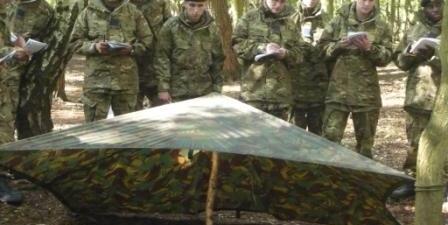
Research Paper Title What are the Perceptions of Phase 1 Military Instructors regarding their Role? Abstract The aim of this research was to investigate the perceptions of phase 1 military instructors regarding their role and perceived effectiveness in the delivery of teaching. It further examined, whether phase 1 instructors believe their current delivery methods and intuitional parameters allow… Read More
Decrease in Injury Rates at the New Zealand Army’s Training Army Depot (TAD)

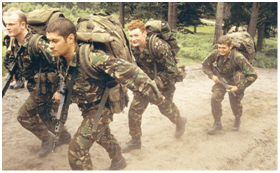
Research  Paper Title Decrease in Injury Rates at Training Army Depot (TAD), New Zealand Army. Introduction Injury rates at Training Army Depot (TAD) All Arms Recruit Courses (AARC’s) have been investigated by the New Zealand Defence Force (NZDF) Exercise Physiology team over the last 4 years. These investigations included physiological and biomechanical assessments as well… Read More

Are There Any Sex Differences in Training Loads during British Army Basic Training?

Research Paper Title Sex Differences in Training Loads during British Army Basic Training. Background To compare training loads between men and women during 14-weeks of British Army standard entry basic training. Methods Thirty-one male (mean ± SD, age 21 ± 4 years, height 1.78 ± 0.08 m, mass 77.1 ± 10.5 kg) and 28 female… Read More

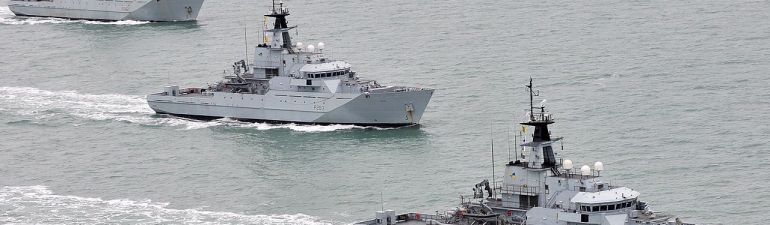
What is the Training Pipeline for a Royal Navy Logistics Officer?

The training pipeline of a Royal Navy (RN) Logistics Officer is: 29 weeks of Initial Officer Training delivered at the Britannia Royal Naval College (BRNC). 9 weeks shore-based training delivered at the Defence Maritime Logistics School (DMLS). 16 weeks specialist training on a sea-going platform. 8 weeks at DMLS before joining the trained strength. RN… Read More

What is the Variability in Physical Fitness Adaptation to Basic Military Training in Australian Army Recruits?

Research Paper Title Positive, limited and negative responders: The variability in physical fitness adaptation to basic military training. Background The purpose of this research was to investigate the heterogeneity of physical adaptation in Australian Army recruits completing a 12-week basic military training regimen. It was a prospective research design. Methods Volunteer recruits (n=195) completed 12-weeks of… Read More

What are the Parachute Regiment Combined Infantryman Course (CIC) Pass Rates for 2011-2-17?

The percentage of Parachute Regiment recruits who completed the 28-week Parachute Regiment Combined Infantryman Course (CIC PARA), aka P Company, between 2011 and 2017 is outlined in Table 1 below. Table 1: CIC PARA Pass Rates Training Year 2011/12 2012/13 2013/14 2014/15 2015/16 2016/17 & Pass 30% 39% 73% 48% 65% 33% You can read… Read More

US Army Military Police Training & Injury Incidence

Research Paper Title A prospective investigation of injury incidence and injury risk factors among army recruits in military police training. Background United States Army military police (MP) training is a 19-week course designed to introduce new recruits to basic soldiering skills, Army values and lifestyle, and law enforcement skills and knowledge. The present investigation examined… Read More