Promotion and Probation Periods

For employees who are promoted, the general principles outlined in the main article (below) should be followed, with the major difference being the outcome for failing the probation period. The employer should make it clear, either verbally or in writing, what the consequence(s) of failing the probation period are prior to the employee accepting the… Read More


Comparing Surgical Cricothyrotomy Techniques by US Army Combat Medics using a Synthetic Cadaver Model

Research Paper Title A randomized cross-over study comparing surgical cricothyrotomy techniques by combat medics using a synthetic cadaver model. Background Cricothyrotomy is a complex procedure with a high rate of complications including failure to cannulate and injury to adjacent anatomy. The Control-Cric™ System and QuickTrach II™ represent two novel devices designed to optimise success and… Read More

What is a Probation Period?

There are different ways to define a probation period, for example: A probation period is a specific period of time for both the employee and employer to assess suitability of the job/role after having first-hand experience. A probation period gives the employer some time to make sure that the selection they made for their vacancy… Read More

British Army Infantry Division Training Team Model

Historically, a performance gap was identified between soldiers in their normal unit employment and the start standard required for the Section Commanders’ Battle Course (SCBC) and the Platoon Sergeants’ Battle Course (PSBC). This had led to poor performance on those courses. The Platoon Sergeant is the second in command of an infantry platoon, comprising of up to… Read More

Organisation of British Army Infantry Divisions

The infantry of the British Army comprises some 25,000 soldiers in 17 different regiments (administrative units), containing one or more battalions (fighting units). They are often referred to informally as ‘cap-badges’ – as each has its own identity. In order to break down this large body of troops into more easily manageable elements, it is split… Read More

British Army: Established Post vs the ‘Black Economy’

An established post is one where a requirement for a service person has been endorsed and funded, and is identified by a Position Identification (PID), to which an individual is assigned. The ‘black economy’ arises when manpower is transferred unofficially from an established post to create a role which is not endorsed or funded. Although this… Read More

New British Army Battle Craft Syllabus

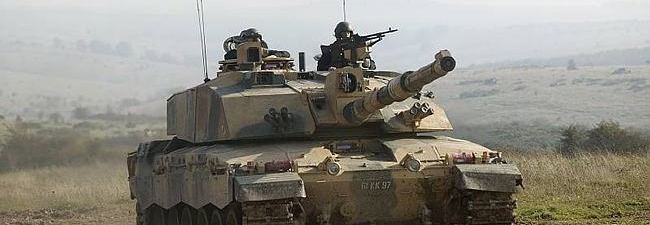
British troops commenced training, at the end of 2017, with the new Battle Craft Syllabus (BCS). Elements from the Royal Tank Regiment (RTR) undertook training on the first iteration of BCS by practising individual, crew and troop skills. The new BCS means that units have to be in the field for 10 days every 3… Read More