
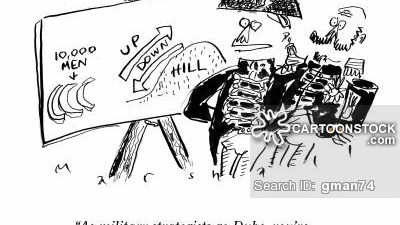
“Do not confuse good fortune, good tactics or good sense. They seldom accompany one another.” Unknown
“Do not confuse good fortune, good tactics or good sense. They seldom accompany one another.” Unknown
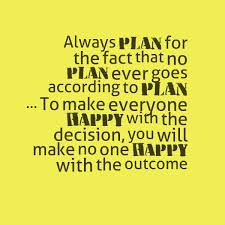
“If other factors are equal, the simplest plan is preferred.” US Army Field Manual 100-5 (19 February 1962)

“…[It is] essential that all leaders from subaltern to commanding general familiarize themselves with the art of clear, logical thinking. It is more valuable to be able to analyze one battle situation correctly, recognize its decisive elements and devise a simple, workable solution for it, than to memorize all the erudition ever written of war.”… Read More

“The main thing is always to have a plan; if it is not the best plan, it is at least better than no plan at all!” General Sir John Monash (1865 to 1931, Australian Army General during World War I), attributed to a letter written in 1918. References Australian War Museum (2016) 1918: Australians in France… Read More

“Successful generals make plans to fit circumstances, but do not try to create circumstances to fit plans.” General George S. Patton (US Army General)

“He who is prepared has his battle half fought…” Miguel de Cervantes (in Don Quixote, 1615) The full quote states “He who is prepared has his battle half fought; nothing is lost by my preparing myself, for I know by experience that I have enemies, visible and invisible, and I know not when, or where, or… Read More

“To be defeated is pardonable; to be surprised – never!” Napoleon Bonaparte (Maxims of War, 1831) (Kiley, 2005) Reference Kiley, K. (2005) Thumbing through the Napoleonic Wars: The Words of Napoleon and Others Who May Have Influenced His Methods. Available from World Wide Web: http://www.napoleon-series.org/research/napoleon/c_quotes.html. [Accessed: 07 August, 2016].

 Boot Camp & Military Fitness Institute