Fail in his duty…

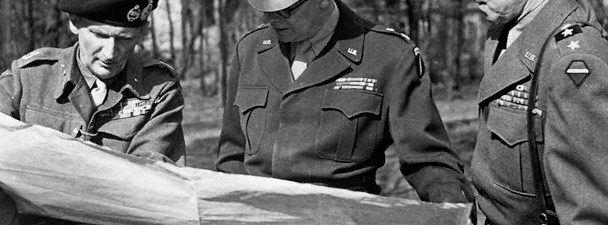
“On learning of the mutiny (Salerno, 1943), Field‐Marshal Montgomery said that although the Mutineers’ actions were quite inexcusable and could not be condoned in any way, ‘where soldiers get into trouble of this nature, it is nearly always the fault of some officer who has failed in his duty.’” J.M. Bereton, The British Soldier; A… Read More

Advancement: Tarpaulin Sailors & the Royal Navy Academy

“In the early 18th century, the “tarpaulin” sailor found it ever increasingly difficult to advance in the Navy of the British Empire (Karsten, 1972). Most officer candidates were coming from the more educated class of the nobility and gentry because they could provide for their own education. However, to further enhance naval officer education and… Read More

Birth of the Royal Navy

“The Puritan Revolution (1640-1660) and the Dutch Wars (1652-1678) led England to establish a permanent national navy with a professional officer corps. It became the Royal Navy in 1660 under Charles II. The Royal Navy became essential in the defense of the island nation and the protection of merchant interests across the globe. Though a… Read More

What is a “Tarpaulin” Sailor?

“In the early 16th century, the modern navies acquired officers from the ranks of enlisted sailors, who had worked their way up to command. These officers are known as “tarpaulin” sailors. They were from very modest families, but were highly experienced with ship handling and naval warfare. The respective navies of the world powers grew… Read More

Studying the Impact of College Selection as it Relates to Future Job Performance…

“In the civilian world, graduates of colleges and universities work for a vast range of companies with extremely diversified pay scales, promotion schedules, and performance evaluation systems. In contrast, all graduates of the commissioning programs serve the same employer: the United States Navy. Therefore, with established performance measures across the organization, job performance in the… Read More