Hip Arthroscopy & Early Weight Bearing Progression in a Military Population

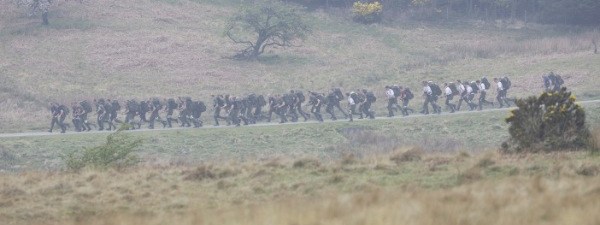
Research Paper Title Functional Outcomes of Hip Arthroscopy in an Active Duty Military Population Utilizing a Criterion-based Early Weight Bearing Progression. Background Hip arthroscopy allows surgeons to address intra-articular pathology of the hip while avoiding more invasive open surgical dislocation. However the post-operative rehabilitation protocols have varied greatly in the literature, with many having prolonged… Read More

British Armed Forces & the Incidence of Hearing Loss

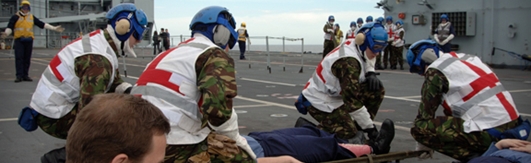
As at 01 October 2017, there were 137, 280 currently serving British armed forces personnel, of which: 2,450 (1.8%) had impaired hearing (H3), of which 337 also had a code for noise induced hearing loss (NIHL) recorded on their medical record. 373 (<1%) had poor hearing (H4), of which 33 also had a code for… Read More

Linking Sensitisation & Spirometry

Research Paper Title Could routine spirometry suggest sensitisation in the military medicine setting? Background Providing evidence of sensitisation is the formal requirement for allergy diagnosis. The aim of this study was to evaluate whether spirometry may be able to predict sensitisation in a representative cohort of Italian Navy military personnel. Methods 2043 (1875 men, 168… Read More

What is the Incidence of MSK Injuries during Basic Training for the Different British Army Infantry Regiments?

Research Paper Title Musculoskeletal injuries in British Army recruits: a prospective study of incidence in different Infantry Regiments. Background Musculoskeletal injuries and attrition incurred during basic military training are a significant socioeconomic burden across many Defence Forces. In order to plan an injury prevention strategy, the purpose of this study was to quantify the regiment-specific… Read More

Battlefield Injuries: Linking Eyeballs & Glue

A smart glue could fill cuts in the outer eyeball sustained during battle, protecting the eye until the wound can be stitched by someone skilled in microsurgery. “Each day that no intervention is taken, the risk of permanent vision loss increases,” says Jack Whalen of the University of Southern California, Los Angeles. His team has… Read More

Linking Health Behaviours & the Development of Diseases in a Military Population

Research Paper Title Predicting how health behaviours contribute to the development of diseases within a military population in the Hungarian Defence Forces. Background Recent legislative amendments in Hungary have resulted in the possibility for early retirement being abolished in the Hungarian Defence Forces. The retirement age for professional soldiers has also increased to 65 years,… Read More

Utilising Technology for the Physiological Monitoring of Healthy Military Personnel

Research Paper Title Physiological monitoring for healthy military personnel. Abstract Military employment commonly exposes personnel to strenuous physical exertion. The resulting interaction between occupational stress and individual susceptibility to illness demands careful management. This could extend to prospective identification of high physiological strain in healthy personnel, in addition to recognition and protection of vulnerable individuals.… Read More