Independent Command!

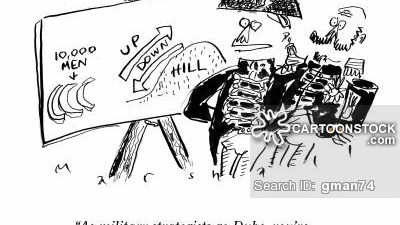
“The intelligent leadership of troops, and the ability to appreciate and predict the way operations develop call for firm and precise direction of forces. Any suggestion of the exercise of independent command by junior commanders is unacceptable. Not knowing the general situation, junior commanders are likely to take decisions incompatible with it; and this may… Read More
Practical Application…

“Leadership is the practical application of character.” Colonel R. Meinertzhagen, CBE, DSO (1878 to 1967), Army Diary, 1899‐1926, 1960 Richard Meinertzhagen was a British soldier, intelligence officer, and ornithologist. He had a decorated military career spanning Africa, where he was credited with creating and executing the infamous Haversack Ruse. While early biographies lionised Meinertzhagen as… Read More

A Declaration of War!

Declaration of War required: The contracting parties recognise that hostilities between themselves must not commence without previous and’explicit warning in the form either of a reasoned declaration of war or of an ultimatum accompanied by a conditional declaration of war. The framers of the Hague Rules were agreed to one rule, namely, that an attack… Read More

How to Sack a Divisional Commander…

How to Sack a Divisional Commander: Tewksbury, 4 May 1471; “Lord Winlock not having advanced to the support of the first line, but remaining stationary, contrary to the expectationsof Somerset, the latter, in a rage, rode up to him, reviled him, and beat his brains out with an axe.” Max Hastings (1985) from The Oxford… Read More

Dark Thunderbolt…

“Let your plans be as dark and impenetrable as night, and when you move, fall like a thunderbolt.” Sun Tzu (400 BCE to 301 BCE) Sunzi, Wade-Giles romanisation Sun-tzu, also spelled Sun Tzu, personal name Sun Wu, (flourished 5th century BC), reputed author of the Chinese classic Bingfa (The Art of War), the earliest known… Read More

The Unwritten Rules of War (1914)

In addition to the written rules there exist certain other well-recognised usages and customs that have developed into, and have become recognised as, rules of warfare. These usages and customs are still in process of development. The development of the laws and usages of war is determined by three principles (US Army, 1914, p.14): First,… Read More