Military Fitness & Running

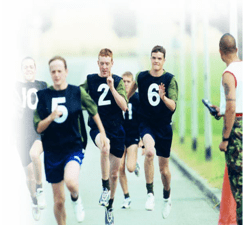
If you are thinking that military fitness boot camps are a high-intensity alternative to daily running, watch out. A core component of military fitness is indeed running . . . and lots of it. In one training session you might do sprints, jogging, sideways running, slow running, you name it. You will cover miles in… Read More
Erm … Can Exercise during Childhood Protect you against Memory Loss many Decades Later?

“CAN exercise during childhood protect you against memory loss many decades later? Exercise early in life seems to have lifelong benefits for the brain, in rats at least. “This is an animal study, but it indicates that physical activity at a young age is very important – not just for development, but for the whole lifelong trajectory of… Read More

Road Running vs Treadmill Running

“RUNNING BATTLE Runners have long debated the difference between training on a treadmill and training on solid ground. “Belt turnover” is commonly cited as a factor that helps to move your foot backwards and there by makes running on a treadmill easier than running on the road. At constant velocity, is this a real effect? If so, wouldn’t… Read More

Interval Training Variations

Manipulation of the interval training principles provides the opportunity for a wide variety of interval training sessions. Outlined below are some of the more commonly used variations: Individual Interval Training Options: Repeats: The same distance, done a set number of times. Repeats of 400 metres, one lap of the track, are the most common, but… Read More

What is Interval-Circuit Training?

“Introduced in the Scandinavian countries in the 1960s and 1970s, interval-circuit training combines interval training and circuit training into one workout.” (Kenney, Wilmore & Costill, 2012, p.223). The circuit may be 3,000 to 10,000 metres in length, with stations every 400 to 1,600 metres (437-1,750 yards). The individual jogs, runs, or sprints the distance between… Read More

What is the Copenhagen Method?

Another more recent interval training method follows the research of Gunnarsson and Bangsbo published in 2012, called the 10-20-30 Training Concept, more commonly known as the Copenhagen Method (Gunnarsson & Bangsbo, 2012). In this study, 18 moderately trained runners (6 females and 12 males) were divided into a high-intensity training (10-20-30) group and a control… Read More