Steeplechase: Athletes vs. Para’s!

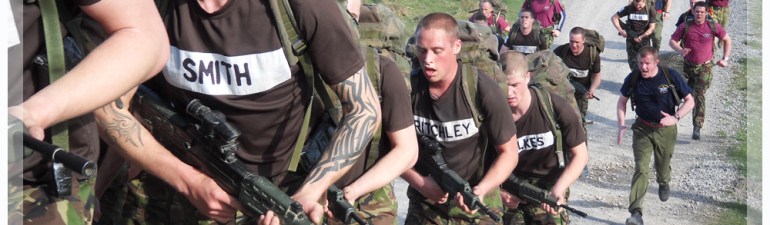
In 2017, the qualification standard for British athletes for the 3,000 metre (1.86 mile) steeplechase was set at: 8:58.00 for men; and 10:40.00 for women. For military personnel attending the All Arms Pre-Parachute Selection (AAPPS) course, commonly known as P Company, or Para recruits on the Combat Infantryman Course (Parachute), the qualification standard for the… Read More

Marathons: Athletes vs. Commandos!

In the 2015 London marathon, times to complete the 26.2 mile (42.16 km) course varied depending on whether the runners were elite or non-elite: Elite Men: 2:04:29 by Wilson Kipsang in 2014. 2:03:05 by Eliud Kipchoge in 2016 Elite Women: 2:15:25 by Paula Radcliffe in 2003. Non-Elite: Finishing with a time of between two and… Read More

200 Metres: Athletes vs. Commandos!

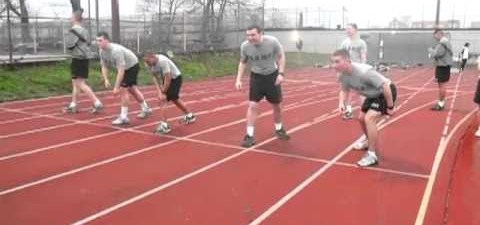
In 2017, the qualification standard for British athletes for the 200 metres was set at: 21.35 seconds for men; and 24.70 seconds for women. For military personnel attending the Royal Marines Recruit Course, the Royal Marines Young Officer Course, and the All Arms Commando Course, the qualification standard for the 200 metres was set at:… Read More

Military Education Support Programmes

People in the military spend a lot of time training and fighting for their country. Sometimes, they do not have enough time for education but they have to get the right and proper training. Therefore, you can find several military education support programmes provided by the army that offer great opportunities. These programmes provide a… Read More

International Consensus on Military Research Priorities & Gaps

Research Paper Title International consensus on military research priorities and gaps – Survey results from the 4th International Congress on Soldiers’ Physical Performance. Background The objectives of this study were to identify perceived priorities related to military personnel’s health and physical performance, among attendees at the 4th International Congress on Soldiers’ Physical Performance (ICSPP), and… Read More

Advancement: Tarpaulin Sailors & the Royal Navy Academy

“In the early 18th century, the “tarpaulin” sailor found it ever increasingly difficult to advance in the Navy of the British Empire (Karsten, 1972). Most officer candidates were coming from the more educated class of the nobility and gentry because they could provide for their own education. However, to further enhance naval officer education and… Read More

Update on the Efficacy of Military Fluid Intake Guidance.

Research Paper Title Update: Efficacy of Military Fluid Intake Guidance. Background Fluid intake during military training is prescribed based on the interactions among work rates, environmental conditions, and uniform configurations. The efficacy of this guidance has not been empirically assessed in over a decade. To determine the acceptability of the fluid intake guidance, sweat losses… Read More