Societal Change & the British Armed Forces

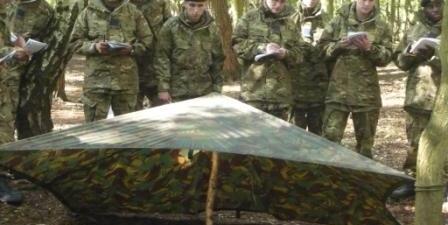
The (then) Adult Learning Inspectorate (ALI, 2005) argued that there were many studies demonstrating that tensions had arisen from the widening difference between increasingly peaceful civilian life and service in a war zone. The ALI stated that recruits’ expectations of their treatment followed the same trajectory: They were ill prepared for what they see as… Read More

Gurkhas: Quest for the Best

Punishing selection for the Brigade of Gurkhas has taken place in Pokhara in the Himalayas. From the initial 7,865 Nepalese applicants, 500 made it through to the final two weeks of testing, where 230 were successful. The arduous process saw potential recruits undergo various mental and physical tests – including the famed five-kilometre Doko race (below). Reference Soldier (2015) Qlobal Sitrep: Quest for… Read More

Left Ventricular Wall Thickness & British Army Recruits

Research Paper Title Left Ventricular Wall Thickness and the Presence of Asymmetric Hypertrophy in Healthy Young Army Recruits: Data from the LARGE Heart Study. Background To use cardiovascular magnetic resonance to investigate left ventricular wall thickness and the presence of asymmetrical hypertrophy in young army recruits before and after a period of intense exercise training.… Read More

What is the BARB Test?

The British Army Recruit Battery or BARB Test is a computer-based, psychometric assessment that was developed by the Defence Evaluation and Research Agency (DERA) and Plymouth University. It is a series of timed questions that assess a candidate’s ability to absorb information quickly, accurately and logically. The computer automatically calculates the candidate’s score, based on the number of… Read More

British Army Recruitment & Selection Statistics for 2012 to 2013

Did you know that between April 2012 and March 2013: Applications to join the British Army: Officers: 7,230 Regular Army and 2,320 Army Reserves Soldiers: 45,290 Regular Army and 24,690 Army Reserves BARB Test (Soldiers Only): A total of 30,580 BARB tests were recorded during this time. 24,550 Regular Army and 6,030 Army Reserves 200 people recorded… Read More

Femoral Neck Stress Fractures & Royal Marine Recruits

Research Paper Title Displaced Femoral Neck Stress Fractures in Royal Marine Recruits – Management and Results of Operative Treatment. Background Femoral neck stress fractures (FNSF) represent 3.5%-8% of stress fractures in military recruits; potentially resulting in medical discharge and/or complications. The incidence of displaced FNSF in the British Army has been reported as 1.8 in… Read More