
What is Lactate Threshold?

Introduction Lactate inflection point (LIP) is the exercise intensity at which the blood concentration of lactate and/or lactic acid begins to increase rapidly. It is often expressed as 85% of maximum heart rate or 75% of maximum oxygen intake. When exercising at or below the lactate threshold, any lactate produced by the muscles is removed… Read More
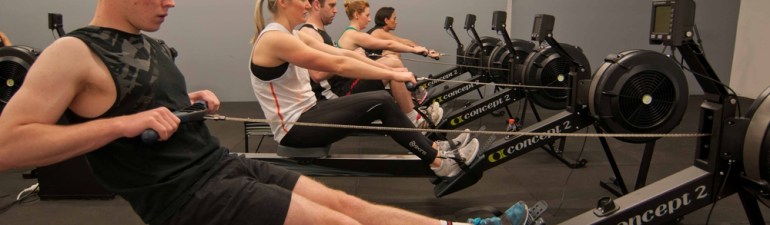
What is Aerobic Conditioning?

Introduction Aerobic conditioning is a process whereby the heart and lungs are trained to pump blood more efficiently, allowing more oxygen to be delivered to muscles and organs. The skeletal muscles also become aerobically conditioned, as regular aerobic exercise produces a shift in muscle fibres from more type II (fast twitch/glycolytic) into more type I… Read More

What is Anaerobic Exercise?

Introduction Anaerobic exercise is a type of exercise that breaks down glucose in the body without using oxygen; anaerobic means “without oxygen”. In practical terms, this means that anaerobic exercise is more intense, but shorter in duration than aerobic exercise. The biochemistry of anaerobic exercise involves a process called glycolysis, in which glucose is converted… Read More

What is Relative Energy Deficiency in Sports (RED-S)?

Introduction Relative energy deficiency in sport (RED-S) is a syndrome in which disordered eating (or low energy availability), amenorrhoea/oligomenorrhoea (in women), and decreased bone mineral density (osteoporosis and osteopenia) are present. It is caused by eating too little food to support the amount of energy being expended by an athlete, often at the urging of… Read More

What is Sports Periodisation?

Introduction Periodisation is a cyclical method of planning and managing athletic or physical training and involves progressive cycling of various aspects of a training program during a specific period. Conditioning programmes can use periodisation to break up the training programme into the off-season, pre-season, in-season, and the post-season. Periodisation divides the year round condition programme… Read More

What is Exertional Rhabdomyolysis?

Introduction Exertional rhabdomyolysis (ER) is the breakdown of muscle from extreme physical exertion. It is one of many types of rhabdomyolysis that can occur, and because of this, the exact prevalence and incidence are unclear. Refer to Overtraining. Cause ER is more likely to occur when strenuous exercise is performed under high temperatures and humidity.… Read More

What is Overtraining?

Introduction Overtraining occurs when a person exceeds their body’s ability to recover from strenuous exercise. Overtraining can be described as a point where a person may have a decrease in performance and plateauing as a result of failure to consistently perform at a certain level or training load; a load which exceeds their recovery capacity.… Read More