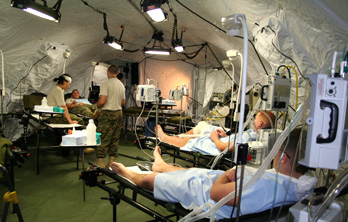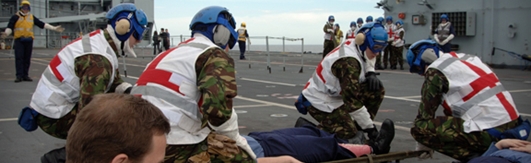
Integration of Expeditionary Surgical and Resuscitation Teams for Special Operations Forces

Research Paper Title Special Operations Force Risk Reduction: Integration of Expeditionary Surgical and Resuscitation Teams. Abstract Haemorrhage in the pre-surgical setting has been the most significant cause of death on the battlefield. Damage control surgery (DCS) near the point of injury (POI) is not a new concept, but having conventional medical teams supporting Special Operations… Read More
Does Repeat Chlamydia Diagnoses Increase the Hazard of Pelvic Inflammatory Disease among US Army Women?

Research Paper Title Repeat Chlamydia Diagnoses Increase the Hazard of Pelvic Inflammatory Disease among US Army Women: A Retrospective Cohort Analysis. Background In the US military, chlamydia is the mostly commonly diagnosed bacterial sexually transmitted infection and the rates of pelvic inflammatory disease (PID) have remained high since the early 2000s. Methods The relationship between… Read More

Contemporary Perspectives on Resilience for Military Readiness and Preparedness

Research Paper Title Perspectives on resilience for military readiness and preparedness: Report of an international military physiology roundtable. Abstract Modern warfare operations often occur in volatile, uncertain, complex, and ambiguous (VUCA) environments accompanied by physical exertion, cognitive overload, sleep restriction and caloric deprivation. The increasingly fast-paced nature of these operations requires military personnel to demonstrate… Read More

What are the Determinants of Human Papillomavirus Vaccination Among US Navy Personnel?

Research Paper Title Determinants of Human Papillomavirus Vaccination Among U.S. Navy Personnel. Background Human papillomavirus (HPV) is the most common sexually transmitted infection, with at least half of sexually active people contracting the virus-a leading aetiology for genital warts and anal, cervical, laryngeal, penile, vaginal, and vulvar cancers. Research suggests HPV is higher among U.S.… Read More

Can We Predict treatment Response to Cognitive Rehabilitation in Military Personnel with Mild Traumatic Brain Injury?

Research Paper Title Predicting treatment response to cognitive rehabilitation in military service members with mild traumatic brain injury. Background Determine factors that affect responsiveness to cognitive rehabilitation (CR) interventions in service members (SMs) who sustained mild traumatic brain injury (mTBI). Methods 126 SMs with a history of mTBI 3 to 24 months postinjury participated in… Read More

Can You Predict Ground Reaction Force from a Hip-Borne Accelerometer during Load Carriage?

Research Paper Title Predicting Ground Reaction Force from a Hip-Borne Accelerometer during Load Carriage. Background Ground reaction forces (GRF) during load carriage differ from unloaded walking. Methods to quantify peak vertical GRF (pGRFvert) of Soldiers walking with loads outside of a laboratory are needed to study GRF during operationally relevant tasks. Therefore, the purpose of… Read More

Risk Factors Associated with Suicidal Ideation in a Sample of Veterans

Research Paper Title Risk factors of suicidal ideation in a population of UK military veterans seeking support for mental health difficulties. Background Little has been reported regarding the risk factors of suicidal ideation in individuals once they have left the military in the UK. The aim of this paper was to explore the risk factors… Read More