
How Does Fitness Training in the Military Develop Leadership Skills?

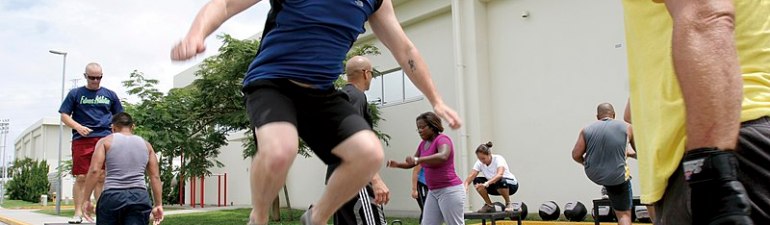
Introduction The military has always been a testing ground for strong leaders. One key aspect of this development is physical fitness training. Not is this a tough and physical style of workout, it also shapes strong minds and characters. Military fitness goes beyond basic exercise. It includes intense workouts, team challenges, and gruelling endurance tests.… Read More

Enhancing Workplace Health: The Role of Walking Pads and Under-Desk Treadmills

Introduction In the modern workplace, where sedentary behaviour is becoming the norm with evidence suggesting that office-based workers spend up to 82% of their day sitting – so finding ways to incorporate physical activity into the workday is essential. Walking pads and under-desk treadmills offer practical solutions to enhance workplace health by allowing employees to… Read More

An Overview of Power Training

Introduction Power training typically involves exercises which apply the maximum amount of force as fast as possible; on the basis that strength + speed = power. Jumping with weights or throwing weights are two examples of power training exercises. Regular weight training exercises such as the clean and jerk and power clean may also be… Read More

What is Complex Training?

Introduction Complex training, also known as contrast training or post-activation potentiation training, involves the integration of strength training and plyometrics in a training system designed to improve explosive power. According to Jace Derwin: Strength training and plyometric training are both effective measures for increasing athletic performance independent of each other, but a true program designed… Read More

Legal Proof of Military Service: Why It Matters for Military Fitness Programmes

Introduction Military fitness is critical to service readiness and operational effectiveness. Armed forces worldwide maintain rigorous physical standards to ensure personnel can meet the demands of their duties. These standards encompass strength, endurance, and overall physical wellness. Their military fitness background can be valuable for veterans transitioning to civilian life, especially in health and wellness… Read More

An Overview of Velocity Based Training

Introduction Velocity based training (VBT) is a modern approach to strength training and power training which utilises velocity tracking technology to provide rich objective data as a means to motivate and support real-time adjustments in an athlete’s training plan. Typical strength and power programming and periodisation plans rely on the manipulation of reps, sets and… Read More

What is Henneman’s Size Principle?

Introduction Henneman’s size principle describes relationships between properties of motor neurons and the muscle fibres they innervate and thus control, which together are called motor units. Motor neurons with large cell bodies tend to innervate fast-twitch, high-force, less fatigue-resistant muscle fibres, whereas motor neurons with small cell bodies tend to innervate slow-twitch, low-force, fatigue-resistant muscle… Read More