
What was the G.I. Bill (1944)?

Introduction The Servicemen’s Readjustment Act of 1944, commonly known as the G.I. Bill, was a law that provided a range of benefits for some of the returning World War II veterans (commonly referred to as G.I.s). The original G.I. Bill expired in 1956, but the term “G.I. Bill” is still used to refer to programmes… Read More

What was the Adjusted Compensation Payment Act (1936)?

Introduction The Adjusted Compensation Payment Act (27 January 1936, Pub.L. 74–425, 49 Stat. 1099) was a piece of United States legislation that provided for the issuance of US Treasury Bonds to veterans who had served in World War I as a form of economic stimulus and relief. The act is sometimes considered to be part… Read More

What was the United Confederate Veterans?

Introduction The United Confederate Veterans (UCV, or simply Confederate Veterans) was an American Civil War veterans’ organisation headquartered in New Orleans, Louisiana. It was organised on 10 June 1889, by ex-soldiers and sailors of the Confederate States as a merger between the Louisiana Division of the Veteran Confederate States Cavalry Association; N.B. Forrest Camp of… Read More

What is a Veterans’ Organisation?

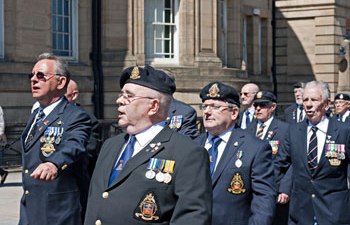
Introduction A veterans’ organisation, also known as an ex-service organisation, is an organisation composed of persons who served in a country’s armed forces, especially those who served in the armed forces during a period of war. Background The organisation’s concerns include benefits for spouses and children, veterans’ claims, post-traumatic stress disorder (PTSD) issues, and other… Read More

Who was Max Immelmann?

Introduction Max Immelmann (21 September 1890 to 18 June 1916) PLM was the first German World War I flying ace. He was a pioneer in fighter aviation and is often mistakenly credited with the first aerial victory using a synchronised gun, which was in fact achieved on 01 July 1915 by the German ace Kurt… Read More