Identifying Drivers of Social Network versus Nonsocial Network Learning

Research Paper Title Individual differences in learning social and nonsocial network structures. Background How do people acquire knowledge about which individuals belong to different cliques or communities? And to what extent does this learning process differ from the process of learning higher-order information about complex associations between nonsocial bits of information? Methods Here, the authors… Read More
Can a Regular Schedule Improve Academic Performance?

A study by Cao and colleagues, at the University of Electronic Science and Technology of China, suggests that orderliness predicts academic performance or to put it another way “Quantitative understanding of relationships between students’ behavioural patterns and academic performances is a significant step towards personalized education.” In this study the researchers collected behavioural records from… Read More

Does Seeking Advice Boost Perceptions of Competence?

Research Paper Title Smart People Ask for (My) Advice: Seeking Advice Boosts Perceptions of Competence. Background Although individuals can derive substantial benefits from exchanging information and ideas, many individuals are reluctant to seek advice from others. The researchers find that people are reticent to seek advice for fear of appearing incompetent. This fear, however, is misplaced. The researchers… Read More

What is Boredom … erm …

Research Paper Title The Bored Mind is a Guiding Mind: Toward a regulatory theory of boredom. Introduction Boredom appears to be ubiquitous. It affects both healthy individuals and patient populations. It affects individuals of all genders and ages, and from all cultures. It finds us at home or at work. It finds drivers behind the wheel, students… Read More

Linking Attention, Walking & Mobile Phones

Cell phones are making people walk differently. A study that tracked how 21 people negotiated an obstacle and a step, without a phone or while texting, reading the screen, or making a call, found that using a phone made people walk slower and in less of a straight path, particularly when texting (Timmis et al., 2017). Reference Timmis, M.A, Bijl,… Read More

Fieldcraft & Elk: Learning Skills & Drills!

“Wily elk learn to outsmart hunters WITH age comes wisdom. Older female elk learn to avoid getting shot by hunters, and may adapt their behaviour to the hunting threat at different times of year. Henrik Thurfjell [and colleagues (2017)] at the University of Alberta, Canada, and his colleagues put GPS tracking collars on 49 female elk in… Read More

Smartphone, Smart Human?

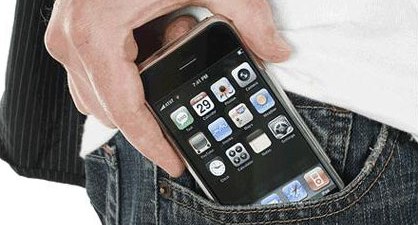
“Technology doesn’t cause intellectual stagnation, but it enables new forms of it if we are complacent. Technology empowers intellectual enrichment and our ability to indulge and act on our curiosity. With a smartphone, for example, you have the sum total of human knowledge in your pocket and can reach practically any person on the planet. What will you do… Read More