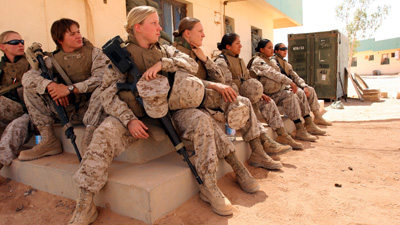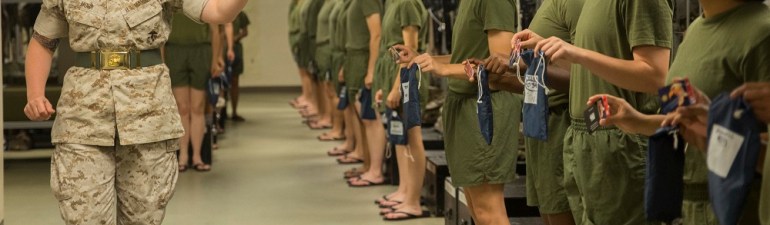
Discussing Why Basic Training Should Remain Gender-Integrated (1999)

Research Paper Title Separation Anxiety and Boot Camp: Why Basic Training Should Remain Gender-Integrated. Abstract Several members of Congress are supporting legislation to separate men and women in basic training in the military for a variety of reasons, including sexual harassment and sexual relations between men and women. The push for such legislation began with several incidents involving multiple… Read More
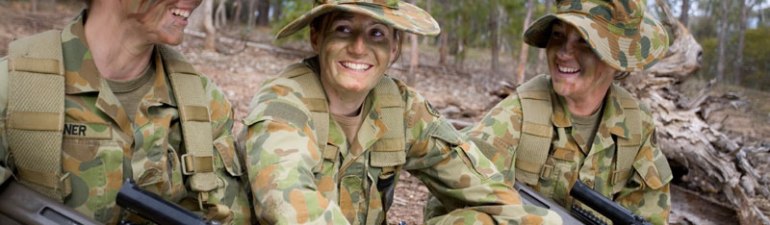
Discussing Gender Progress in the Canadian Armed Forces

Research Paper Title Soldiering in the Canadian Forces: How and Why Gender Counts! Abstract Women have advanced in Canada since the Royal Commission on the Status of Women in 1970. This Commission made 167 recommendations to redress documented inequalities and inequities. Six pertained directly to the full integration of women in the Canadian Forces (CF). In 1989,… Read More

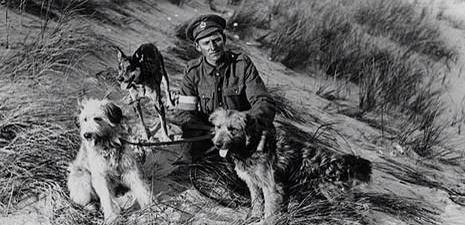
Discussing Physical Culture in the Evolution of the British Army, 1860-1920

Research Paper Title “The army isn’t all work”: Physical culture in the evolution of the British army, 1860-1920. Abstract Between the Crimean War and the end of WWI the British Army underwent a dramatic change from being an anachronistic and frequently ineffective organisation to being perhaps the most professional and highly trained army in the world. British… Read More

Where is the Case for Co-Ed Ground Combat in the USMC?

Research Paper Title U.S. Marine Corps Research Findings: Where is the Case for Co-Ed Ground Combat? Abstract This is an Interim Special Report on the multi-phased research effort, initiated by Marine Corps Commandant General James Amos to gather quantitative data identifying the physical strength requirements of combat arms units. The goal is to find ways… Read More

Danish Officer Career Management System (2001)

The Danish military officer system is in a state of transition. In both old and new systems, officers are required to serve until mandatory retirement points. The old system’s retirement points were: Generals at age 65; Colonels and lieutenant colonels at age 62; and Majors at age 52. Under the new system, all officers, regardless of rank,… Read More

Norwegian Officer Career Management System (2001)

In principle, the Norwegian officer system is a full-career long-term profession that allows officers to complete a 40-year career or retire at age 60, whichever comes first, with two-thirds pay as a pension. There are few NCOs in Norway’s armed forces, and the officer corps fulfills many of the responsibilities traditionally performed by NCOs. This practice results… Read More

Canadian Officer Career Management System (2001)

The Canadian officer system is organised as a long-career system with expectation of service to age 55 for most officers and to age 60 for officers in the medical, dental, and legal profession. The career is composed of three engagements: Short engagement through 9 years of service with about 95% passing beyond; Intermediate engagement through 20… Read More