Marathons: Athletes vs. Para’s!

In the 2015 London marathon, times to complete the 26.2 mile (42.16 km) course varied depending on whether the runners were elite or non-elite: Elite Men: 2:04:29 by Wilson Kipsang in 2014. 2:03:05 by Eliud Kipchoge in 2016 Elite Women: 2:15:25 by Paula Radcliffe in 2003. Non-Elite: Finishing with a time of between two and… Read More
Steeplechase: Athletes vs. Para’s!

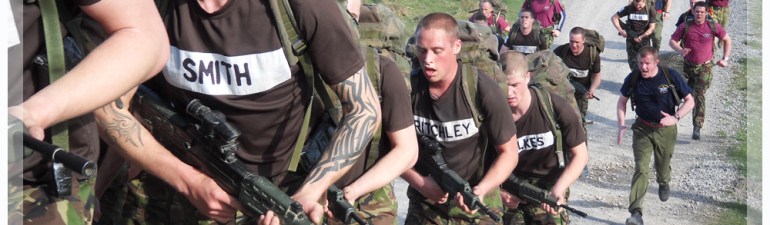
In 2017, the qualification standard for British athletes for the 3,000 metre (1.86 mile) steeplechase was set at: 8:58.00 for men; and 10:40.00 for women. For military personnel attending the All Arms Pre-Parachute Selection (AAPPS) course, commonly known as P Company, or Para recruits on the Combat Infantryman Course (Parachute), the qualification standard for the… Read More

The Construction of Collective Identify in the British Army’s Parachute Regiment

Dissertation Title The Construction of Collective Identify in the British Parachute Regiment: A Storytelling Approach. Abstract The aim of this thesis is to illustrate how stories and extracts from stories can be used to investigate issues centred on organisational identity in the British Parachute Regiment, the `tribe’ at the centre of this research. This thesis employs a… Read More

What are the Parachute Regiment Combined Infantryman Course (CIC) Pass Rates for 2011-2-17?

The percentage of Parachute Regiment recruits who completed the 28-week Parachute Regiment Combined Infantryman Course (CIC PARA), aka P Company, between 2011 and 2017 is outlined in Table 1 below. Table 1: CIC PARA Pass Rates Training Year 2011/12 2012/13 2013/14 2014/15 2015/16 2016/17 & Pass 30% 39% 73% 48% 65% 33% You can read… Read More

Development of Britain’s Airborne Forces during WW2 (Opinion 1)

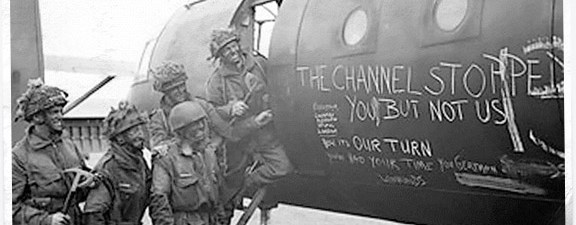
Research Paper Title The Development of Britain’s Airborne Forces during the Second World War. Abstract The operational history of Britain’s airborne forces during the Second World War ranges from small-scale raids in 1941 through to full divisional deployments in 1944 and 1945. British airborne warfare during the war appears to be characterised by a lack of consistency or apparently… Read More

Development of Britain’s Airborne Forces during WW2 (Opinion 2)

Research Paper Title The Development of British Airborne Forces in World War Two and the Concepts, Expectations and Reality of their Participation in Operations Market Garden and Varsity. Abstract This dissertation is an examination into the evolution of Britain‟s airborne forces during World War Two and their participation in two of the most contentious battles… Read More