An Overview of Dynamite

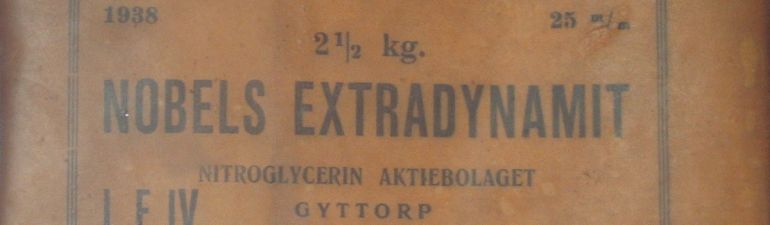
Introduction Dynamite is an explosive made of nitroglycerin, sorbents (such as powdered shells or clay), and stabilisers. It was invented by the Swedish chemist and engineer Alfred Nobel in Geesthacht, Northern Germany, and was patented in 1867. It rapidly gained wide-scale use as a more robust alternative to the traditional black powder explosives. It allows… Read More


What is IMX 101?

Introduction IMX-101 is a high-performance insensitive high explosive composite mixture developed by BAE Systems and the United States Army to replace TNT in artillery shells. Refer to Dunnite and Dynamite. Background IMX stands for “Insensitive Munitions eXplosives”, which refers to the purpose of IMX-101: to provide explosive force equivalent to TNT without its sensitivity to… Read More

An Overview of TNT

Introduction Trinitrotoluene, more commonly known as TNT – more specifically 2,4,6-trinitrotoluene, and by its preferred IUPAC name 2-methyl-1,3,5-trinitrobenzene – is a chemical compound with the formula C6H2(NO2)3CH3. Refer to Dynamite, IMX 101, and Dunnite. TNT is occasionally used as a reagent in chemical synthesis, but it is best known as an explosive material with convenient… Read More

What was the 2012 Afyonkarahisar Arsenal Explosion?

Introduction The 2012 Afyonkarahisar arsenal explosion occurred at 21:15 local time on 5 September 2012 in Afyonkarahisar, Turkey. According to Turkish Armed Forces, 25 servicemen died, four other soldiers and three civilians were injured by the accident. Background A fire at the locality followed the explosion. The remains of two non-commissioned officers (NCO’s), two special… Read More

What is the Effect of Repeated Low-Level Explosives on Canadian Armed Forces’ Breaching Instructors & Range Staff?

Research Paper Title Blast in Context: The Neuropsychological and Neurocognitive Effects of Long-Term Occupational Exposure to Repeated Low-Level Explosives on Canadian Armed Forces’ Breaching Instructors and Range Staff. Background Currently, there is strong interest within the military to better understand the effects of long-term occupational exposure to repeated low-level blast on health and performance. To… Read More

The Management of Blast Injury of the Hands related to Warfare Explosive Devices

Research Paper Title Blast injury of the hand related to warfare explosive devices: experience from the French Military Health Service. Background The objective was to report on the experience of the French Army Health Service in the management of blast injury of the hands related to warfare explosive devices. Methods A retrospective study was conducted… Read More