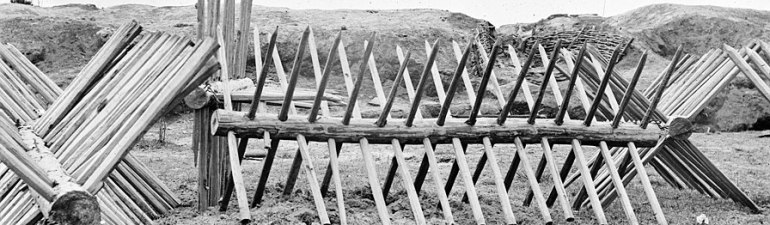
What is a Cheval de Frise?

Introduction The cheval de frise (plural: chevaux de frise, “Frisian horses”) was a defensive obstacle, existing in a number of forms, principally as a static anti-cavalry obstacle but also quickly movable to close breaches. Refer to Czech Hedgehog, Caltrop, Dragon’s Teeth, Makibishi, and Sudis. The term was also applied to underwater constructions used to prevent… Read More

An Overview of Aerial Incidents in Switzerland in World War II

Introduction During World War II the neutral country of Switzerland underwent initially sporadic bombing and aerial combat events that became more frequent during the later stages of the war. Switzerland was adjacent to and at times almost completely surrounded by Axis, or Axis-occupied, countries. On several occasions, Allied bombing raids hit targets in Switzerland resulting… Read More

What was Plan W (1940)?

Introduction Plan W, during World War II, was a plan of joint military operations between the governments of Ireland and the United Kingdom devised between 1940 and 1942, to be executed in the event of an invasion of Ireland by Nazi Germany. Although Ireland was officially neutral, after the German Blitzkriegs of 1939-1940 that resulted… Read More

An Overview of the Bombing of Dublin in World War II

Introduction The first bombing of Dublin in World War II occurred early on the morning of 02 January 1941, when German bombs were dropped on the Terenure area of south Dublin. This was followed, early on the following morning of 03 January 1941, by further German bombing of houses on Donore Terrace in the South… Read More

An Overview of Irish Neutrality during World War II

Introduction The policy of Irish neutrality during World War II was adopted by the Oireachtas at the instigation of the Taoiseach Éamon de Valera upon the outbreak of World War II in Europe. It was maintained throughout the conflict, in spite of several German air raids by aircraft that missed their intended British targets, and… Read More