
“In an word, a good officer realizes that his men will follow his judgment if they are convinced that he too is prepared to risk his life in their defense.” Richard A. Gabriel and Paul L. Savage. (1978) Crisis in Command: Mismanagement in the Army.
“In an word, a good officer realizes that his men will follow his judgment if they are convinced that he too is prepared to risk his life in their defense.” Richard A. Gabriel and Paul L. Savage. (1978) Crisis in Command: Mismanagement in the Army.
“Certainly a main factor in the cohesion of the primary group in the German Army, namely the company, was the sense of responsibility, performance of duty, and willingness to take combat risks demonstrated by German officers. The data on the readiness of the officers and upper classes to die in battle support this assertion. The… Read More
“Effective, professional military leadership requires that certain standards of officer behaviour be met. Officers’ attitudes, actions, and abilities contribute to the formation of unit integrity. At a very minimum, these standards do not permit soldiers to be ‘used’ in pursuit of an officer’s career.” Richard A. Gabriel and Paul L. Savage. (1978) Crisis in Command:Mismanagement… Read More
“An Army leader, more than a leader anywhere else, must be a leader in every sense. And for such a leader to help his men in everything but in their thinking is for him to avoid one of this chief responsibilities and to neglect one of the chief methods in which he can serve his… Read More
“[The platoon commander] must have in a supreme degree …the will to win. The thirty men whom he leads take their inspiration from him; they will be lions or lizards in harmony with the tune he pipes.” Colonel W.N. Nicholson, C.M.G., D.S.O. (1939) Behind the Lines. London: Jonathan Cape.
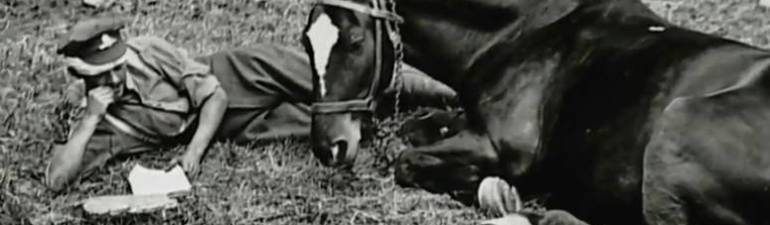
“With a decent troop officer, when we rode up to an outlying pub on the edge of a village, he’d say, ‘It’s all right to go in for a drink.’ …… After several grand days like this we’d ride back into Tidworth camp, and probably see the wretched infantry fellows staggering in off a route… Read More
“Battalions certainly differed in their character and their competence both from others and within themselves over time. Battalions are much like an organic family. They are held together by intangibles ‐ leadership, comradeship, motivation, morale ‐ that defy quantification or even easy description. In good units, soldiers feel ‐ know ‐ they are in the… Read More

 Boot Camp & Military Fitness Institute