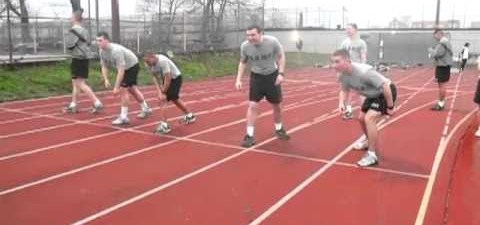
A Brief Overview of Middle-Distance Running

Introduction Middle-distance running events are track races longer than sprints, ranging from 500 metres up to two miles (3218.688 metres). The standard middle distances are the 800 metres, 1500 metres and mile run, although the 3000 metres may also be classified as a middle-distance event. The 1500 m came about as a result of running… Read More

What is Barefoot Running?

Introduction Barefoot running, also called “natural running”, is the act of running without footwear. With the advent of modern footwear, running barefoot has become less common in most parts of the world but is still practiced in parts of Africa and Latin America. In some Western countries, barefoot running has grown in popularity due to… Read More

Why Strength Training Matters for Runners

Introduction While running is seen as primarily a cardiovascular activity (aka heart and lungs), there are many components to effectively training for long-distance events. While logging miles and increasing run time are important, strength training (aka resistance training) should also be incorporated into a well-rounded routine. Many runners focus solely on pounding the pavement without… Read More

What is Running Economy?

Introduction Running economy (RE) a complex, multifactorial concept that represents the sum of metabolic, cardiorespiratory, biomechanical and neuromuscular efficiency during running. Oxygen consumption (VO2) is the most commonly used method for measuring running economy, as the exchange of gases in the body, specifically oxygen and carbon dioxide, closely reflects energy metabolism. Those who are able… Read More

Who was Paavo Nurmi?

Introduction Paavo Johannes Nurmi (Finnish pronunciation: [ˈpɑːʋo ˈnurmi] (About this soundlisten); 13 June 1897 to 02 October 1973) was a Finnish middle-distance and long-distance runner. Refer to Interval Training. He was called the “Flying Finn” or the “Phantom Finn”, as he dominated distance running in the early 20th century. Nurmi set 22 official world records… Read More

Does Added Load Increase the PFJ Loading Variables Associated with PFJ Pain in Running?

Research Paper Title Patellofemoral Joint Stress during Running with Added Load in Females. Background Patellofemoral joint (PFJ) pain syndrome is a commonly reported form of pain in female runners and military personnel. Increased PFJ stress may be a contributing factor. Few studies have examined PFJ stress running with added load. The purpose was to analyse… Read More