
Introduction
Intensive military training is designed to push individuals well beyond ordinary physical and mental limits. Whether it is a twelve-week training or a specialised course like the US Navy SEALs, recruits and trainees face physical loads and irregular sleep patterns that they may not be accustomed to.
While physical endurance and mental resilience are often discussed, recovery is just as important. Without proper recovery protocols, the risk of injury, chronic fatigue, and burnout increases sharply, undermining performance and long-term health.
Understanding how recruits recover during these demanding phases can help inform training approaches in both military and civilian contexts. This can prove to be beneficial in recruiting and retaining individuals for the military.
As the US Department of Defence states, 2023 was a challenging year for military recruiting. Firstly, only 23% of individuals between the ages of 17 and 24 qualify to join the military. Among them, many are not interested in joining because of the harsh training programmes, which are essential for their preparation.
Learning about the right recovery techniques and how they can benefit recruits can boost their morale. This can play a significant role in ensuring that most people joining the training not only complete it successfully but also stay.
In this article, we will briefly discuss some recovery techniques military recruits can use during intensive training phases.
Passive Recovery and the Role of Physical Therapy
Recruits are given structured sleep and wake times during basic training. While aiming for 7-9 hours is ideal, the reality of intensive military training often presents challenges.
When you cannot get much sleep, prioritise making the sleep you do get as good as possible. Prioritise a consistent sleep schedule whenever possible, even if it is shorter.
Even with the sleep schedule provided to recruits, the early weeks remain physically and mentally draining, leaving little time for meaningful recovery. Thus, passive recovery remains a crucial component of injury prevention.
Some facilities, such as Fort Benning and Fort Jackson, also offer access to on-site healthcare teams. Besides general physicians, these teams also include physical therapists who help manage musculoskeletal injuries and guide recovery.
In recent years, approaches like the US Army’s Holistic Health and Fitness (H2F) programme have also gained momentum. The Army is expanding this programme to all soldiers and not just arms brigades. Under this programme, all military personnel, including new recruits, can access H2F staff, which includes physical therapists, dentists, athletic trainers, and more.
Under this new programme, methods like contrast bathing, compression therapy, and targeted soft tissue work are being explored. These methods can offer significant health benefits.
For instance, the New York Post states that contrast therapy involves alternating exposure to hot and cold temperatures. It offers health advantages like better blood circulation, less muscle soreness, quicker post-exercise recovery, and reduced inflammation.
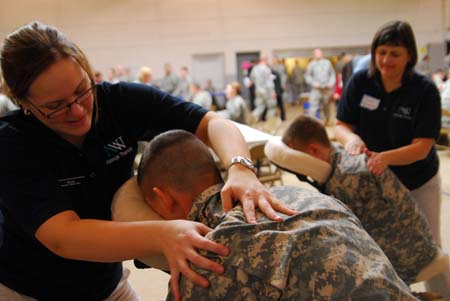
Massage has also become a part of relaxation techniques for many recruits. Consider the example of deep tissue massage, which has been increasingly recommended during rest weeks or mid-cycle recovery blocks.
Its impact on delayed onset muscle soreness and chronic tension has been noted in scientific research and studies.

Active Recovery and Mobility Drills
While rest is paramount, complete inactivity can sometimes hinder recovery. Low-intensity exercise, also known as active recovery, boosts blood flow to remove metabolic waste and deliver oxygen and nutrients to tired muscles.
Gentle activities such as walking, light cycling, or swimming for 20-30 minutes can be incredibly beneficial on designated recovery days. Complementing active recovery with mobility drills is also essential.
Your range of motion can improve, and muscle stiffness can lessen with dynamic stretches, foam rolling, and gentle yoga. They can prevent the formation of adhesions that can lead to injury. Concentrating on tight areas, such as the hamstrings, hip flexors, and shoulders, can significantly enhance your overall physical readiness.
Mobility drills can also help increase your body’s flexibility, which can aid in passing the new fitness test. As stated by Live Now FOX, the US Army recently announced a new fitness test that took effect on 01 June 2025. The new test focuses on holistic fitness over just event-specific training.
Event-specific training prepares soldiers for specific events like practicing deadlifts and power throws for the Army Combat Fitness Test (ACFT). Active recovery and flexibility drills can help prepare your body for holistic fitness.
Recruits should also focus on their diet. Highly processed foods, excessive sugar, and unhealthy fats have little nutritional value and can contribute to inflammation and energy slumps. Similarly, while some supplements are beneficial, recruits should exercise extreme caution when using unverified products. Many can contain banned substances, lead to adverse health effects, or simply be ineffective.
External Therapeutic Interventions: Beyond Self-Care
While recruits receive structured instruction on recovery methods as part of their training, the physical demands often require additional therapeutic support for physical and mental well-being. These professional treatments can significantly boost recovery, prevent injuries, and help maintain top performance.
One such highly effective intervention is manual therapy. Techniques such as targeted stretching or trigger point release can precisely address muscle imbalances, chronic tightness, and myofascial restrictions. These specialised approaches go beyond what an individual can typically achieve with foam rolling or basic stretching.
It is similar to athletes receiving sports massages to help them endure the physical demands on their bodies. It is a form of massage therapy dedicated to helping active individuals achieve their highest goals. Recruits can find a sports massage centre near their training camp to take advantage of the benefits.
For instance, Camp Mabry is one of the oldest military camps located in Austin, Texas. It was established in the 1890s. Someone who is taking military training classes at Camp Mabry can look to get a sports massage.
These sessions are tailored to address the specific muscle groups and movement patterns heavily utilised during military training. It helps restore elasticity, reduce stiffness, and accelerate the healing process.
Experts also advise to avoid overtraining. Overtraining can severely slow your progress and increase your risk of injury. Key warning signs include persistent fatigue that does not improve with rest and decreased performance despite continued effort. Other signs include an elevated resting heart rate, prolonged muscle soreness, and increased irritability or mood swings.
Timely external intervention as soon as the symptoms appear can help prevent fatigue and musculoskeletal injuries.
Summary
The rigorous path of military training demands peak performance and intelligent recovery. By embracing the tips in this article, recruits can significantly enhance their physical and mental resilience.
Prioritising these recovery techniques is not a luxury. It is a critical investment that mitigates injury, sustains performance, and ultimately builds the robust readiness essential for a successful military career.


 Boot Camp & Military Fitness Institute