
Introduction
This is an article sponsored by USANA Health Sciences.
Fitness comes in many forms, and the way people train often depends on their goals, lifestyle, and physical needs. Military fitness and traditional fitness may share some similarities, but their approach, intensity, and structure are different. Military training is designed to build strength, endurance, and resilience for high-pressure situations. In comparison, traditional fitness tends to focus on personal goals such as weight loss, muscle growth, or overall well-being.

Military training pushes individuals beyond their comfort zones, often incorporating high-intensity, functional exercises that mimic real-life challenges. Traditional fitness, on the other hand, provides a more flexible approach where people can tailor their workouts to suit their abilities and long-term goals. Understanding the critical differences between these two training approaches helps people decide which approach fits best with their fitness journey.
Role of Nutrition in Military and Traditional Training
The demands of military training require a diet that supports endurance, muscle recovery, and sustained energy. Military personnel and those following a similar training style need meals rich in protein, complex carbohydrates, and healthy fats to fuel their bodies through long, intense workouts. Unlike traditional gym-goers who can plan meals around their workout times, military trainees often face unpredictable schedules, making quick, nutrient-dense meals essential for maintaining energy and strength.
Alongside a balanced diet, supplements can also be combined to support nutritional needs. Individuals can opt for various supplements, probiotic products, and even protein options from trusted brands like USANA Health Sciences to support their nutritional needs, whether they are training at a military level or following a structured gym routine. Traditional fitness allows for more flexibility in meal planning, as workouts are typically shorter and easier to schedule. Plus, one can alter their diet based on nutritional demands as traditional fitness allows for a more personalised approach, where individuals can tailor it to their specific goals, fitness levels, and daily routines.

Training Structure and Intensity
Military training follows a structured approach that prioritises endurance, agility, and functional strength. Workouts are often intense and involve full-body exercises, such as running with weighted backpacks, obstacle courses, and bodyweight drills. These sessions aim to build physical and mental resilience, preparing individuals for challenging conditions (on operations or the battlefield) rather than improving strength or aesthetics (for leisure or competition).
Traditional fitness offers more variety in intensity and structure. People can choose weightlifting, running, swimming, cycling, football, or whichever works best for them based on their personal fitness goals. Gym workouts often focus on specific muscle groups, using equipment like free weights, resistance bands, and machines to target different areas. Nonetheless, traditional fitness can also be structured around HIIT (high-intensity interval training). The difference lies in combat readiness, which is often the main focus of military training, while a civilian would train either for physical fitness, toning their body, or simply boosting their well-being.
Mental and Physical Demands
Military training is as much about mental toughness as it is about physical endurance. Recruits and those following military programmes are pushed up to and beyond their perceived limits, often training under stress, exhaustion, and challenging conditions. The focus is not merely on getting stronger but also on developing discipline, problem-solving skills, and the ability to function effectively under pressure. This type of training builds resilience, which is essential for military operations but can also be beneficial in everyday life.
Traditional fitness, while still demanding, allows for more controlled progression and self-paced workouts. People can set their fitness targets, take rest days when needed, and adjust their routines to fit their schedules. Mental discipline is still required to stay consistent, but the approach is more flexible. Rather than being forced to push through discomfort, traditional fitness encourages gradual improvement.
Equipment and Training Environment
Military training often relies on minimal equipment and maximises bodyweight exercises, outdoor training, and functional movements. Training environments could include open fields, obstacle courses, or urban settings that replicate real-life challenges. Instead of traditional gym machines, military workouts incorporate weighted rucksacks, sandbags, tyres, and pull-up bars to develop strength and endurance. The focus is on preparing individuals for the physical demands they might encounter in unpredictable environments.
Traditional fitness is more structured around gym equipment, with access to treadmills, weights, and resistance machines. Workouts can be completed in climate-controlled environments, with the option to follow personalised routines based on specific fitness goals. While some traditional fitness enthusiasts enjoy outdoor workouts or high-intensity training, the emphasis is generally on controlled exercises that focus on specific muscle groups or endurance goals.
Group Training vs. Individual Focus
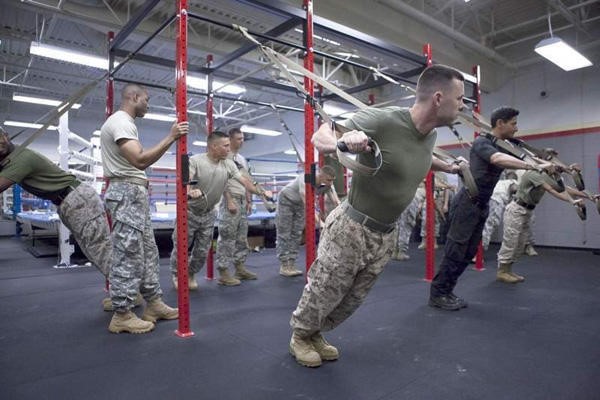
Military training is designed to develop both individual capability and collective strength, ensuring that personnel can perform under physically and mentally demanding conditions. Training begins with individual fitness, focusing on endurance, strength, and discipline. This foundation prepares recruits for collective training, where teamwork, coordination, and unit cohesion are essential. Whether in boot camps or elite forces training, individuals push through challenges together, relying on their team for motivation and support. This collective approach enhances mental resilience, leadership skills, and trust, as every person’s performance directly affects the unit’s success. Military training suits those who thrive in structured, high-energy group environments where personal effort contributes to overall team effectiveness.
Traditional fitness, on the other hand, is more individual-focused. Whether training alone at the gym or following a personal workout routine, people have full control over their pace and progress. While many enjoy the social aspect of group fitness classes, most traditional fitness programmes prioritise personal goals over collective performance.
Long-Term Sustainability and Lifestyle Adaptation
Military fitness is intense and physically demanding, which can make long-term sustainability more challenging outside of a structured training environment. The risk of injury is higher due to the extreme nature of the workouts, and without proper recovery, overtraining can lead to burnout. While some people continue military training after their service, maintaining that level of intensity long-term requires strong discipline and commitment to recovery.
Traditional fitness offers a more sustainable approach, allowing for adjustments based on personal fitness levels, goals, and lifestyle changes. The flexibility of gym workouts, yoga, cycling, and strength training makes it easier to maintain long-term consistency. While traditional fitness may not push individuals to their absolute physical limits like military training, it provides a balanced approach.

Which One is Right for You?
Choosing between military and traditional fitness depends on individual preferences, goals, and lifestyle. Military training suits those looking for high-intensity, full-body conditioning with a strong focus on endurance and mental resilience. It is ideal for those who enjoy structured, physically demanding workouts and thrive in a team-oriented setting. An example of military training approaches can also be taken from a recent study. The study evaluated two military training approaches – a sports-focused programme (Athletes group) and traditional military physical training (Traditional group) – to measure their effects on body composition and physical fitness. Over 31 weeks, cadets participated in structured training that included running, swimming, pull-ups, push-ups, and sit-ups, with assessments before and after the program. The Athletes group engaged in sports-based conditioning, while the Traditional group followed conventional military fitness routines. Both methods led to improved strength, endurance, and body composition, though the Traditional group showed greater relative gains in some exercises, while the Athletes group maintained higher overall performance levels.
Traditional fitness, on the other hand, offers a more customisable experience. Whether aiming for strength, weight loss, or general health, traditional workouts provide variety and flexibility. Both styles have their benefits, and the best choice depends on what motivates and challenges each individual the most.
Summary
Military and traditional fitness take different approaches, but both have their place in helping people achieve their fitness goals. Military training focuses on endurance and mental toughness through intense, functional workouts, while traditional fitness focuses on individual goals with more structured, flexible routines. For those who love high-energy, high-intensity challenges, the military fitness approach might be the perfect fit. For others who prefer a controlled, goal-oriented approach, traditional fitness offers the flexibility to tailor workouts to personal needs.


 Boot Camp & Military Fitness Institute