
Introduction
The roots of military training can be traced back to the start of organised physical exercise. It goes back to the days of the ancient Greeks where physical exercise was an integral part of a person’s responsibility to maintain good health. Of course, one key motivation was to produce good infantry soldiers who could march long distances, overpower the enemy, and win battles.

In the early 1800s, there was a shift towards gymnastic-based activities, which is still practiced to this day. The first military gymnastics school was established in Madrid by Francisco Amorós y Ondeano, a former soldier, after the defeat of Napoleon.
Military training has evolved a great deal over time with the historical focus on physical preparation to mental elements, the introduction of technology, and a focus on the family to get happier (and therefore more effective) soldiers, which is why the military family images today show smiling and content faces.
The ‘Natural Method’
The Natural Method of training believes in developing muscularity, organic resistance, and speed that will help an individual run, walk, jump, climb, and move better to help the soldier develop both defending and attacking skills. This method goes back a long time, and is relevant to this day even though there have been many innovations over time in military training.
In today’s military environment its practical application is in assault/obstacle courses, steeplechase courses, stretcher and log races, and different types of battle scenarios. Obstacle training is particularly helpful, as it brings many of these elements together.
- Physical endurance has become critical in military training since the Second World War. It is very important that a soldier is able to move quickly and efficiently in different terrains while carrying a load. During WWII it was realised that the fitness and speed of a soldier could make a key difference in the battlespace. During WWII’s Operation Market Garden, paratroopers landed many miles from their target and had to march for a long distance while carrying all their equipment – a scenario still tested during their training.
- Combat sports, as a physical activity, has also become very important. The first combat sports in military training included wrestling, boxing, and pankration (a type of mixed martial arts).
- Military units from around the world still practice them in different ways, for example the British Army routinely practices milling (which is a form of boxing to train controlled aggression).
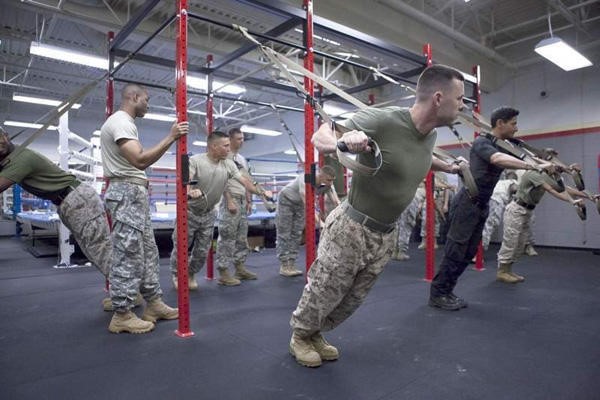
The Traditional Military Model
Five key areas have been practiced over the years in military training:
- Gymnastics and calisthenics exercises;
- Outdoor obstacle courses in different environments;
- Close contact (or combat-related) events such as wrestling, boxing, and grappling;
- Sports such as football, tennis, and swimming; and
- Speed marching to develop bipedal endurance.
Much of this remains true in the modern-era military training as well.
In this model, the main physical qualities that are developed are:
- Strength;
- Mobility;
- Coordination;
- Reaction time and speed;
- Cardio-respiratory function; and
- Balance.
Military Boot Camps
A boot camp offers basic combat training where the recruit soldiers are extensively trained (including physically, emotionally, and mentally). These boot camps are ubiquitous and their basic principles have been developed from the traditional military model.
Boot camps give new recruits a strong foundation that will help them become competent soldiers and achieve their future goals; aiding them to perform their assigned roles more efficiently.
These boot camps can last from a ‘short’ 10 weeks to over 6 months, depending on the future role of the soldier.
The Introduction of Technology
Systemic scientific developments have impacted warfare and military training. The present age, which is often called the “knowledge age” or the “post-modern age”, has witnessed many innovations.
New guns have extended the range and improved the volume of fire. The automatic gun, which first came out in 1884, has seen many improvements. Advances in computers, communications technology, surveillance, and information systems, have given the commander better control. Systems integration improves precision for the force.
The Gulf War – which is widely accepted was a key change – contained elements from the past like artillery and tanks but also included precision weapons that aimed to keep collateral damage to a minimum. New technologies and capabilities have enabled better surveillance, the gathering of real-time information, and more accurate target recognition/acquisition.
Further, advances are going to continue. Smart(er) bombs are already being developed, for example. They will be able to navigate on their own and hit the target with amazing accuracy, even if the weather conditions are poor (it can be argued smart bombs were developed and used during WWII, but they are nowhere near the technical sophistication of the Smart bombs being developed now).
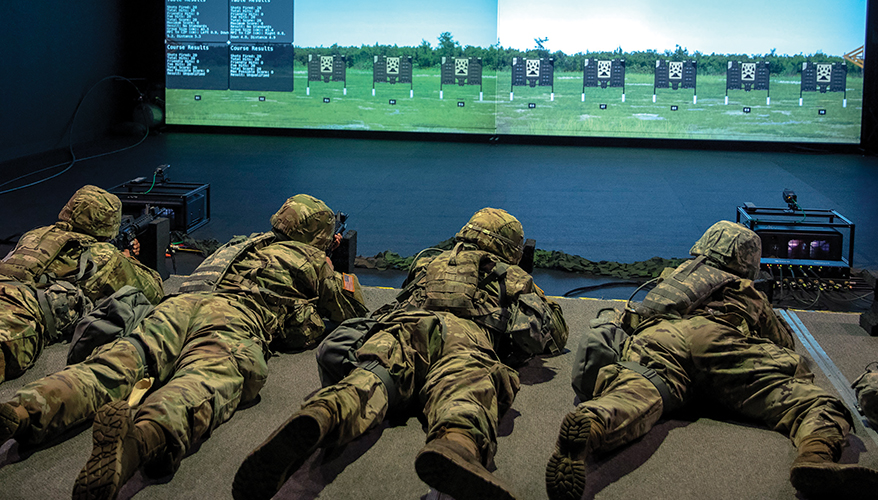
Contemporary era military training establishments also have had to adapt. Although physical training is still important, military training also now includes learning how to use computers, augmented reality (AR), and virtual reality (VR). For example, soldiers can now learn to fire weapons on a digital range rather than a traditional range (soldiers can train indoors in any weather and costs are reduced due to live rounds not being used).
Unconventional Information Warfare
We have seen another change in the 21st century from networked warfare that includes precision guidance systems and targeting to unconventional information warfare. Cyber capabilities allow anonymity, which can enable both state and non-state actors to have access to the same resources and information (states may or may not have control over these non-state actors).
The military has to learn differently to adapt to battles that can potentially be omnipresent and multidomain. As such, new knowledge and skills are required or need to be upgraded/adapted. The curricula at a number of military schools are now looking more like what is taught on civilian academic programmes (but with a military twist/orientation).
Military Training and Family Dynamics
Military service often has a profound effect on the modern family (although this has often taken a ‘back seat’). It will often have an impact or influence roles, routines, and relationships – especially during (longer) deployments. The spouse will have to take on the responsibilities and roles of both parents when a soldier is deployed, and this can be stressful. Even the children are not spared and it can affect their academic performance.
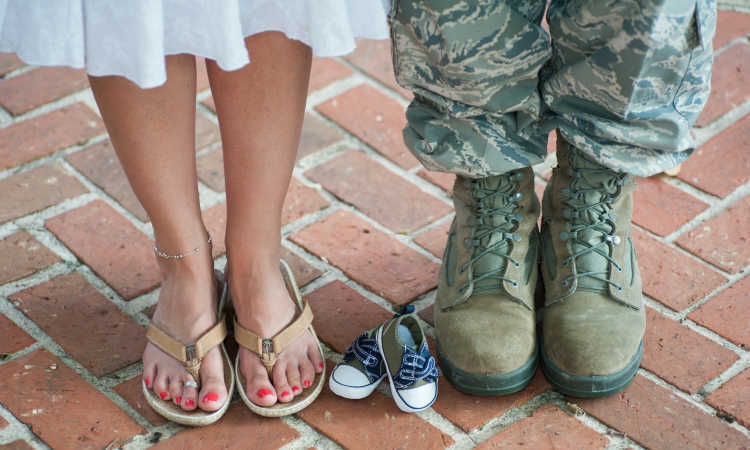
Contemporary military schools are looking into family dynamics and developing ways of dealing with the various effects that military service can have on military families. As such, they are increasingly hiring psychologists, psychiatrists, and counsellors to help soldiers and their families better manage the impacts of military service on their lives.
Summary
Warfare is sure to keep evolving and, as a result, military training will also evolve. Technology, such as software and algorithms, will play an increasingly bigger role. By 2040, many global powers are expected to have a formal space force, there will be human and hybrid machine teaming, and AR/VR will be embedded in the defence environment.
As a result, science and technology are going to play an even bigger role. And, military training will have to respond accordingly. However, family dynamics will remain a critical factor. After all, as the Americans like to say, you will still need “boots on the ground”, and a happy soldier will always be more operationally effective.


 Boot Camp & Military Fitness Institute