
Introduction
Coeliac disease is a condition where your immune system attacks your own tissues when you eat gluten. This damages your gut (small intestine) so your body cannot properly take in nutrients. It can cause a range of symptoms, including diarrhoea, abdominal pain and bloating.

Coeliac disease is caused by an adverse reaction to gluten, which is a dietary protein found in 3 types of cereal:
- Wheat;
- Barley; and
- Rye.
Gluten is found in any food that contains those cereals, including:
- Pasta;
- Cakes;
- Breakfast cereals;
- Most types of bread;
- Certain types of sauces;
- Some ready meals; and
- In addition, most beers are made with barley.
Can I Join?
Coeliac disease is a bar to entry to the British armed forces if the individual is already diagnosed.
Given that the NHS states that “Coeliac disease is a condition that affects at least 1 in every 100 people in the UK.”, this is a sizeable proportion of the population barred from serving. Coeliac UK suggests that of the 1 in 100 only 30% are currently clinically diagnosed.
What If I am Already Serving?
On 01 December 2012, 140 serving personnel were diagnosed with Coeliac disease (56 Army, 44 RAF, and 40 RN), whilst less than 10 were discharged between 01 April 2009 and 31 March 2012.
Service personnel who present significant conditions of the alimentary system such as coeliac, which either degrades the functional capacity and performance, and/or fails to respond satisfactorily to treatment, may require to be downgraded non-deployable, or recommended for medical discharge. However, the severity of each case is considered on its individual merit. (Daily Hansard – Written Answers).
In May 2023, approximately 100 serving British Army personnel (52 for the RN in October 2022) were recorded on the Defence Medical Information Capability Programme (DMICP) as having a read code for Coeliac disease.
The DMICP is the source of electronic, integrated healthcare records for primary healthcare and some Ministry of Defence (MOD) specialist care providers from which searches can be run.
Potential read codes include:
- 68W4 (Coeliac disease autoantibody profile positive)
- J690 (Coeliac disease)
- J6900 (Congenital coeliac disease)
- J6901 (Acquired coeliac disease)
- J690z (Coeliac disease NOS)
Although a diagnosis of Coeliac disease will not lead (automatically) to discharge for serving personnel, there have questions over whether it would affect career progression due to the change in MDS/MES status.
A commentator on ARRSE, a community-based forum, suggests that “GF ration packs” are now available (the comment was made on 26 January 2022). However, the latest version of JSP 950 (v3.0, August 2024, p.5-E-1) contradicts this by stating “however, gluten-free ration packs are not available.”
UK Parliament Petition
There have been several petitions to the UK parliament (14 January 2014, 26 August 2020, and 05 September 2020) but they have failed to gain traction.
There was also a petition on Change.org which started on 09 January 2020.
Other Special Dietary Requirements
There have been many comments regarding catering to the special dietary requirements of vegetarian, Halal and Kosher. However, those following these special dietary requirements can eat other foods in an emergency without suffering any physical complications.
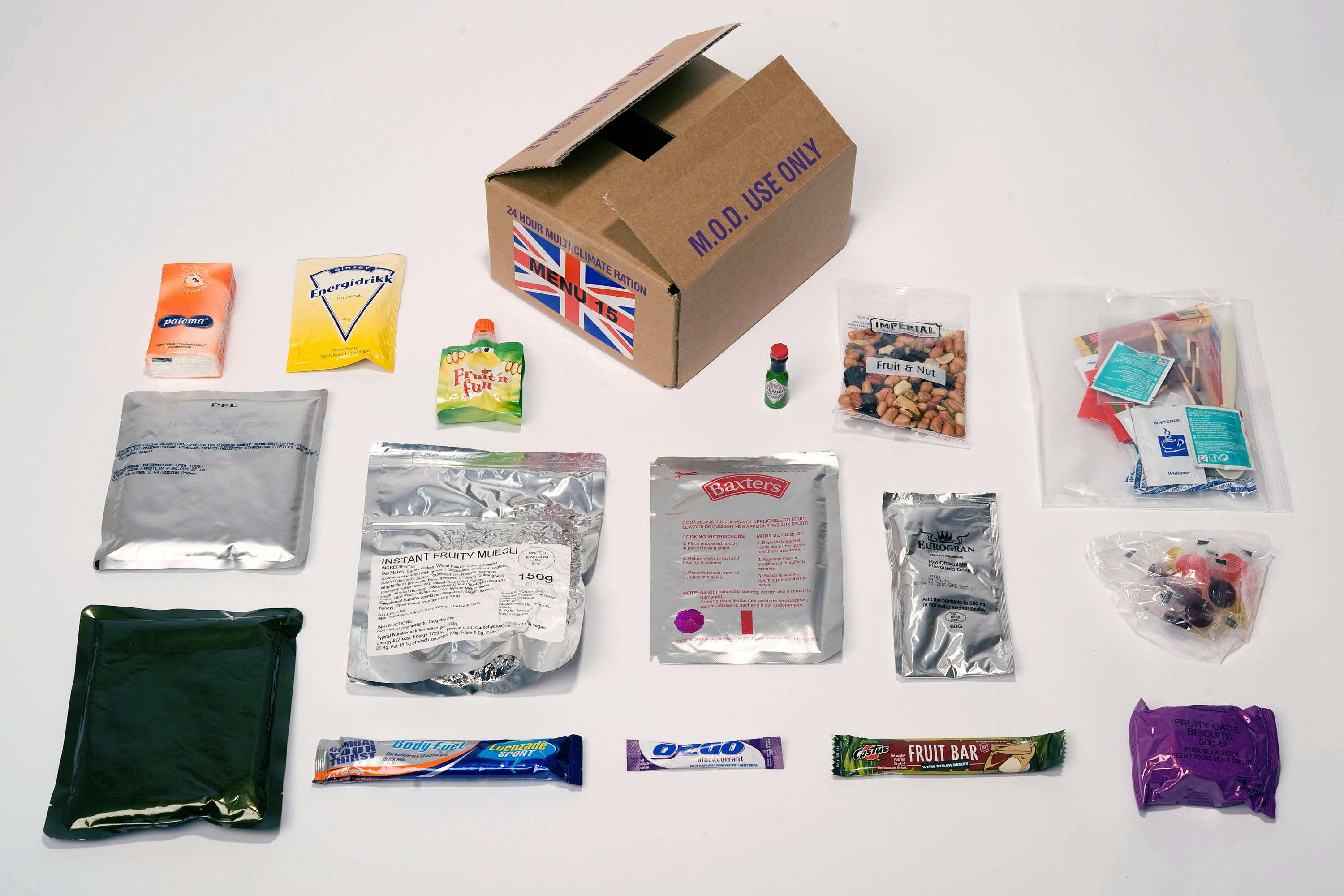
In contrast, Coeliacs cannot eat gluten containing rations without experiencing, to varying degrees, a physical complication. This can lead to incapacitation and impact on operations, potentially putting lives at risk.
JSP 950 (v2.4, October 2022)
JSP 950 Medical Policy Leaflet 6-7-7, aka the Joint Service Manual of Medical Fitness, states (p.4-E-2):
“9. Gluten sensitivity. Candidates with a history of gluten sensitive enteropathy (Coeliac Disease) or gluten sensitivity are UNFIT.”
On Page 5-E-1 and 2 it goes on to state:
“Coeliac disease and gluten sensitivity
5. Care should be taken in grading patients with Coeliac disease as there is evidence that poor dietary control is associated with a wide range of potential GI and non-GI complications, including malignancy. The MOD is responsible for ensuring service personnel have access to a gluten free diet as far as is reasonably practicable; however, gluten-free ration packs are not available. The potential inability to provide a continuous gluten-free diet means that service personnel with Coeliac disease must have a risk assessment performed by a single-Service occupational medicine consultant prior to deployment. The assessment must include defining whether a reliable supply of gluten-free produce is available and whether appropriate catering facilities exist to produce gluten-free food in the proposed deployed location
6. Where sSs are able reliably to provide a gluten free diet and appropriate preparation facilities, or where appointments or postings are to units in countries1 where a gluten-free diet is achievable then a grading of no higher than P3 MLD (ALME L3) may be awarded by a consultant occupational physician led Medical Board. Appropriate Med Lim Codes or restrictions may need to be applied to ensure that the service person is not moved away from that assessed catering facility and supply chain. Where any of these requirements are not achievable a grading no higher than P7 MND is to be applied.”
Note 1: “Including BFG, Cyprus and Gibraltar, appointments to embassies in developed countries, exchange posts in developed countries and other appointments where pre-boarding assessment indicates that the service-person can achieve an unbroken gluten-free diet.”
JSP 950 (V3.0, August 2024)
This current version states (p.4-E-4):
“25. Coeliac disease. Candidates with a history of gluten sensitive enteropathy (coeliac disease) are UNFIT, due to the current inability to provide a sustained gluten-free diet throughout a service career, causing both short- and long-term illness. Coeliac disease is a condition with the potential for significant systemic illness if a gluten free diet is not maintained.11“
Note 11: “Symptoms may include: anaemia, abdominal pain, nausea, diarrhoea, rash, arthropathy, headaches, fatigue and poor concentration. Small bowel lymphoma is a rare complication associated with an un-sustained gluten free diet.”
Page 5-E-1 and 2 repeat verbatim the v2.4 (October 2022) JSP 950 wording.
Summary
- If you are already diagnosed with Coeliac disease and try to join you will be barred.
- If you have not been diagnosed with Coeliac disease and try to join you might be eligible to join (subject to any symptoms or other conditions you might have).
- If you ‘develop’ Coeliac disease whilst serving you may be able to continue your military service, but it will be dealt with on a case-by-case basis, and subject to the severity of symptoms.
- It will be for a medical board to decide.


 Boot Camp & Military Fitness Institute