
Introduction
Grave markers for fallen warriors have long stood as symbols of respect and honour for the brave men and women who have served and sacrificed for the United States. Each marker represents a soldier’s service and the collective memory of a nation that deeply values its veterans. These markers are essential in ensuring that the legacies of fallen soldiers endure, reminding future generations of the high price of freedom.
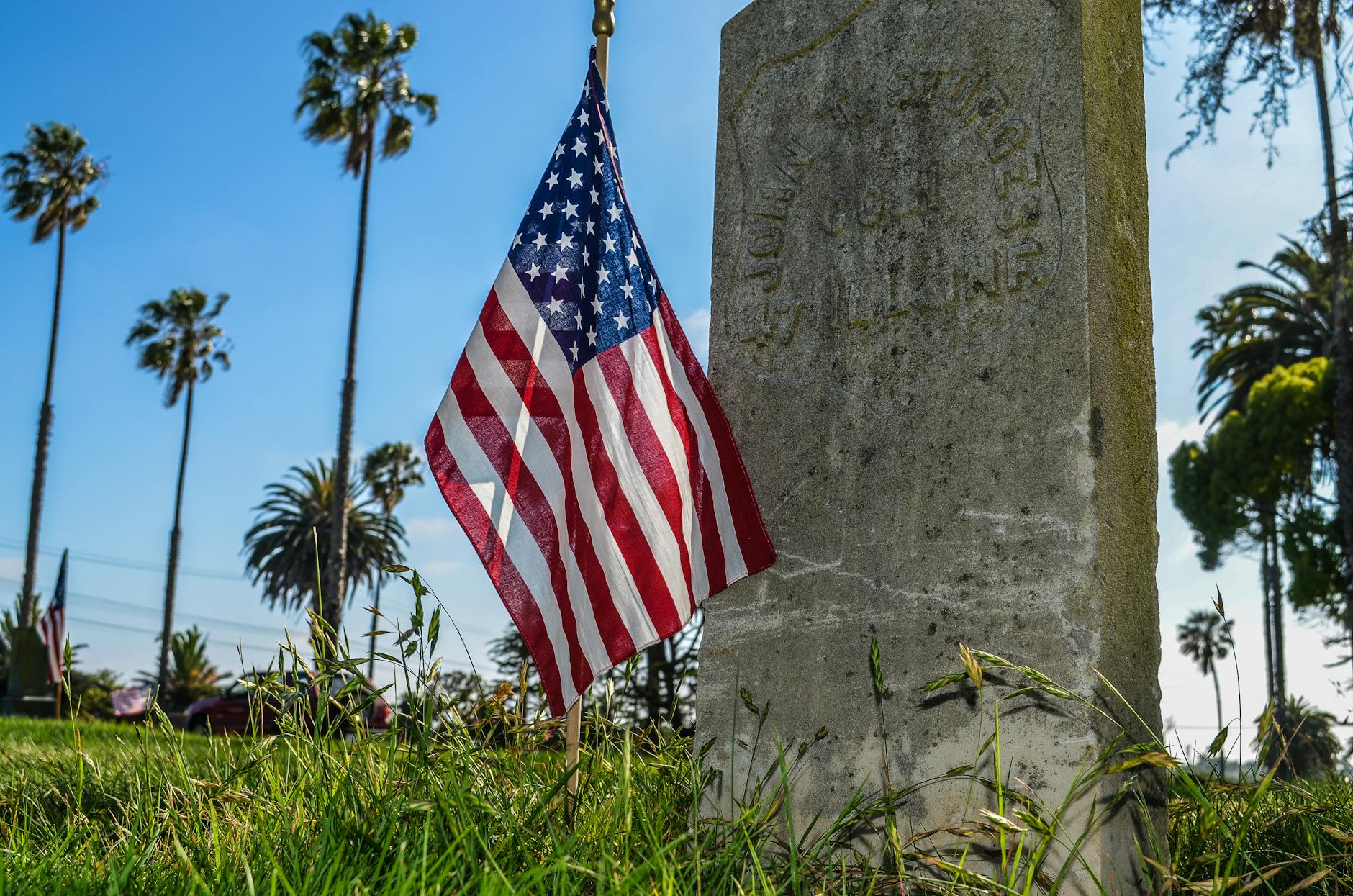
This article traces the evolution of military grave markers in America from the pre-Civil War era to the present day. With the historical context and developments in grave marker design, we gain deeper insight into how the nation honours its military dead.
Pre-Civil War Era Grave Markers
Before the American Civil War (1861-1865), burial customs for military men varied greatly depending on rank, location, and resources. Soldiers were often buried at battle sites or in local cemeteries overseen by garrison commanders. These early military graves were typically marked with simple wooden markers, reflecting the limited resources available during colonial and early American conflicts.
Wooden markers, though practical, were susceptible to the elements and often deteriorated quickly. As a result, the transition to more durable materials such as sandstone and schist became common by the 17th century. These early stone markers, however, were often sparsely inscribed, featuring minimal details about the soldier because of the rudimentary carving tools and limited focus on individual memorialisation.
The Civil War and the Beginning of Standardisation

The Civil War marked a pivotal moment in military burial practices. With casualties in the hundreds of thousands, the need for formalised military burials became urgent. As the war progressed, General Orders No. 75 (1861) was issued, making it the responsibility of commanders to maintain burial records and establish burial sites.
This period saw the introduction of white marble headstones as the standard for military graves. These markers began to include not just the names of the fallen but also ranks, birthdates, and death dates, ensuring that each soldier’s service was recognised with dignity and respect.
Post-Civil War Revolution in Grave Markers
In response to the overwhelming number of Civil War casualties, Congress passed legislation to create national cemeteries, providing a formal resting place for the war dead. This marked the beginning of a national effort to standardise military grave markers and ensure long-term care for soldiers’ graves.
The National Cemeteries Act of 1867 further refined the designs of these markers, establishing federal oversight and responsibility. Grave markers became more uniform in size and shape, with consistent use of marble and granite. Inscriptions also became more detailed, reflecting the growing importance of individual recognition in military burials.
The Introduction of Religious Symbols
By the late 19th century, religious symbols began to appear on military headstones, reflecting the diverse faiths of American soldiers. The Latin Cross and Star of David were among the first religious emblems authorised for use, acknowledging the important role of religion in many soldiers’ lives.
This change enhanced the personalisation of grave markers and underscored the significance of faith within the military community. Religious symbols became an integral part of the design, allowing families to honour their loved ones following their beliefs.
Military Grave Markers in the 20th Century
World War I ushered in a new era of military burial practices with the introduction of the General Type headstone. The headstone was crafted from American white marble, measuring 42 inches long, 13 inches wide, and 4 inches thick. It displayed the soldier’s name, rank, regiment, division, date of death, and state of origin on its front face. This headstone design, adopted after the war, emphasised uniformity across military graves, symbolising the equality of sacrifice made by all soldiers, regardless of rank.
Over time, more religious symbols were authorised, reflecting the growing religious diversity in the US military as more troops from various backgrounds enlisted in service.
Military Grave Markers During and After World War II
The sheer magnitude of loss during World War II required further changes in military burial customs. In addition to national cemeteries, international military cemeteries were established to honour the US soldiers who died overseas.
Grave marker designs continued to evolve, with some WWII veterans receiving headstones featuring more personalised inscriptions and using materials such as granite. The large-scale nature of WWII also led to the introduction of memorial tablets for those whose bodies were never recovered.

Modern Military Grave Markers
Today, military grave markers have retained many traditional elements while also reflecting the diversity of modern-day service members. National cemeteries now use markers crafted from durable materials such as granite and bronze, with specific designs for different conflicts and eras.
Technology has also become an important tool in military cemeteries, allowing families to easily locate gravesites and view detailed records through online databases. QR codes and digital apps are sometimes integrated with modern headstones, providing additional information about the individual soldier’s life and service.
Symbolism and the Cultural Impact of Military Grave Markers
Military grave markers serve as powerful symbols of national identity and pride. They are often focal points in Veterans’ Day ceremonies, public memorials, and commemorative events. Each marker represents the ultimate sacrifice made by soldiers and serves as a lasting reminder of the nation’s gratitude.
Moreover, military grave markers have influenced broader American memorial culture. The simple yet dignified design of military headstones has inspired countless war memorials and monuments, contributing to the collective memory and honouring the nation’s veterans.
Summary
From their humble crosses in colonial America to the standardised marble markers of today, military grave markers have evolved significantly. Each phase of development reflects not only the changing nature of warfare but also the growing recognition of soldiers’ service and sacrifice.
As we look to the future, military grave markers will continue to adapt to the needs of a diverse military force. The markers will remain a testament to the bravery and dedication of America’s soldiers, honouring their legacies for generations to come.


 Boot Camp & Military Fitness Institute