
Introduction
The United States Space Force (USSF) is the space service branch of the US Armed Forces and the world’s first space force. Along with the US Air Force, it is part of the Department of the Air Force, led by the secretary of the Air Force. Its military heads are the chief of space operations, who is one of the Joint Chiefs of Staff, and vice chief of space operations.
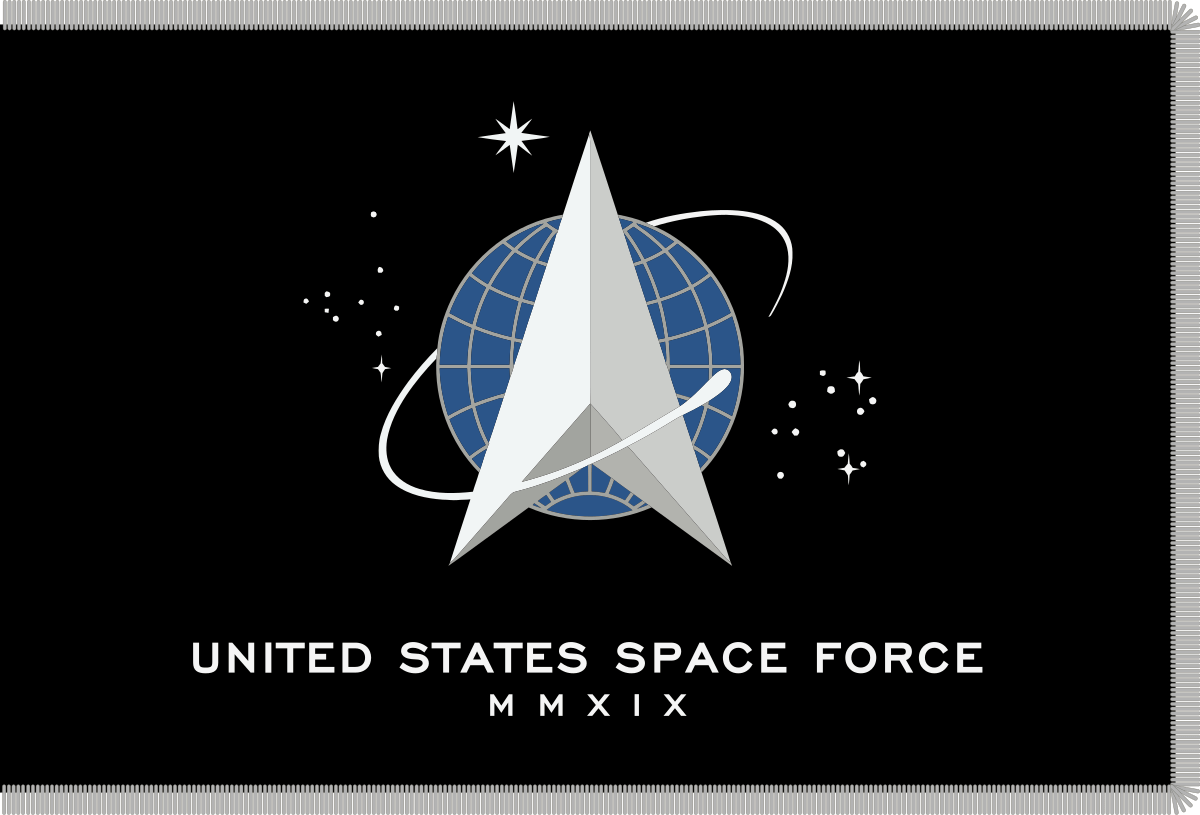
The Space Force is the smallest US armed service, consisting of 8,600 military personnel. It operates 77 spacecraft in total across various programs such as GPS, Space Fence, military satellite communications constellations, X-37B spaceplanes, US missile warning system, US space surveillance network, and the Satellite Control Network. Under the Goldwater-Nichols Act, the Space Force is responsible for organising, training, and equipping space forces, which are then presented to the unified combatant commands, predominantly to United States Space Command, for operational employment.
The US Space Force traces its roots to the beginning of the Cold War, with the first military space programs starting in 1945. In 1954, the Air Force established the Western Development Division, the world’s first dedicated space organisation, under General Bernard Schriever and unified its space forces under Air Force Space Command in 1982. US space forces have participated in every US conflict since the Vietnam War, most notably in the Persian Gulf War, often referred to as the first “space war”.
The first discussion of a US Space Force occurred under President Dwight Eisenhower’s administration in 1958 and it was nearly established in 1982 by President Ronald Reagan as part of the Strategic Defence Initiative. The 2001 Space Commission argued for the creation of a Space Corps around 2007-2011, but due to the September 11 attacks and war on terror any plans were put on hold. In 2017, Representatives Jim Cooper and Mike Rogers’ proposal for a Space Corps passed the House but failed in the Senate. In 2019, the House and Senate resolved their differences to pass the United States Space Force Act. It was signed into law by President Donald Trump, establishing the US Space Force as the first new independent military service since the Army Air Forces were reorganised as the US Air Force in 1947.
Mission
As outlined in 10 U.S.C. § 9081 and originally introduced in the United States Space Force Act, the Space Force is organized, trained, and equipped to:
- Provide freedom of operation for the United States in, from, and to space;
- Conduct space operations; and
- Protect the interests of the United States in space.
The Department of Defence further defines the specified functions of the Space Force to:
- Provide freedom of operation for the United States in, from, and to space.
- Provide prompt and sustained space operations.
- Protect the interests of the United States in space.
- Deter aggression in, from, and to space.
- Conduct space operations.
Cornerstone Responsibilities and Core Competencies
On 10 August 2020, the Space Force released its capstone doctrine, Spacepower: Doctrine for Space Forces, further expanding on its enumerated missions and duties. In Spacepower, the Space Force defines its three cornerstone responsibilities of military space forces, which it articulates why spacepower is vital to US prosperity and security.
- Preserve freedom of action: Unfettered access to and freedom to operate in space is a vital national interest; it is the ability to accomplish all four components of national power – diplomatic, information, military, and economic – of a nation’s implicit or explicit space strategy. Military space forces fundamentally exist to protect, defend, and preserve this freedom of action.
- Enable Joint Lethality and Effectiveness: Space capabilities strengthen operations in the other domains of warfare and reinforce every Joint function – the US does not project or employ power without space. At the same time, military space forces must rely on military operations in the other domains to protect and defend space freedom of action. Military space forces operate as part of the closely integrated Joint Force across the entire conflict continuum in support of the full range of military operations.
- Provide Independent Options: A central tenet of military spacepower is the ability to independently achieve strategic effects. In this capacity, military spacepower is more than an adjunct to landpower, seapower, airpower, and cyberpower. Across the conflict continuum, military spacepower provides national leadership with independent military options that advance the nation’s prosperity and security. Military space forces achieve national objectives by projecting power in, from, to space.

The cornerstone responsibilities are executed through the five military spacepower core competencies:
- Space Security: establishes and promotes stable conditions for the safe and secure access to space activities for civil, commercial, intelligence community, and multinational partners.
- Combat Power Projection: integrates defensive and offensive operations to maintain a desired level of freedom of action relative to an adversary. Combat Power Projection in concert with other competencies enhances freedom of action by deterring aggression or compelling an adversary to change behaviour.
- Space Mobility and Logistics (SML): enables movement and support of military equipment and personnel in the space domain, from the space domain back to Earth, and to the space domain.
- Information Mobility: provides timely, rapid and reliable collection and transportation of data across the range of military operations in support of tactical, operational, and strategic decision making.
- Space Domain Awareness (SDA): encompasses the effective identification, characterisation and understanding of any factor associated with the space domain that could affect space operations and thereby impact the security, safety, economy, or environment of our Nation.
Brief History
Early Military Space Development
Following the end of the World War II, each of the military services began to turn to space. General of the Army Henry H. Arnold, commander of the Army Air Forces identified spaceflight as a critical military capability, with each of the services developing parallel space and rocket programmes.
In 1954 the Air Force created the first dedicated space organisation in the world, creating the Western Development Division under General Bernard Schriever. The Army followed shortly after, establishing the Army Ballistic Missile Agency in 1955, led by General John Bruce Medaris and former German scientist Wernher von Braun. Both these organisations, along with the Naval Research Laboratory, were vital in developing the first American rockets and spacecraft.
The launch of Sputnik 1 and the initial failure of the Naval Research Laboratory’s Project Vanguard reinvigorated the military space programme, with the Army successfully launching America’s first satellite, Explorer 1 on a Juno 1 rocket. Sputnik also prompted a short-lived consolidation of military space under the Advanced Research Projects Agency. Despite concerns within the existing military services that the Advanced Research Project Agency would evolve into a US Space Force, space authorities were returned to the Army, Navy, and Air Forces.
However, the newly established National Aeronautics and Space Administration absorbed the Army Ballistic Missile Agency and the Navy’s Project Vanguard in 1959, leaving the Air Force mostly unscathed. In 1961, the Air Force was designated the military’s executive agent for space, giving it leadership within the Department of Defence.
Military Space Operations in the Cold War
While the Air Force had overall leadership in space, the Army and Navy still had space missions, with the Army and Navy responsible for operating elements of satellite communications systems and the Navy leading the development and operation of satellite navigation systems. Established in 1962 as the world’s first military space operations command, the Navy Astronautics Group was created to operate the Navy’s communication and navigation satellites. The first military employment of space forces occurred during the Vietnam War, with the Air Force using its weather and communications satellites to support ground and air operations in theater. Early military spacecraft included the Air Force’s Defence Satellite Communications System, Vela nuclear detonation detection satellites, the Missile Defence Alarm System, and the Navy’s Transit and Timation navigation satellites. Presidents Eisenhower and Kennedy were strong advocates of the United States’ space programmes – both military and civil. During President Kennedy’s We choose to go to the Moon speech, he declared:
“Space science, like nuclear science and all technology, has no conscience of its own. Whether it will become a force for good or ill depends on man. And only if the United States occupies a position of preeminence can we help decide whether this new ocean will be a sea of peace or a new terrifying theatre of war. I do not say that we should or will go unprotected against the hostile misuse of space, any more than we go unprotected against the hostile use of land or sea.”
Each of the military services also provided significant support to NASA’s civil space program, with the Army Ballistic Missile Agency’s Project Adam and Air Force’s Man in Space Soonest programmes forming the basis for NASA’s Project Mercury. The Army and Air Force developed all of NASA’s pre-Saturn V space launch vehicles, with the Army Ballistic Missile Agency designing the Redstone and Saturn I, while the Air Force repurposed the Atlas. The Air Force, Marine Corps, and Navy provided all of NASA’s early astronauts and led astronaut rescue and recovery missions. The Air Force also provided range support for NASA launches from Cape Canaveral Air Force Station.
Concerned by Soviet orbital flights, the Air Force strongly pushed for a crewed military spaceflight programme. General Curtis LeMay drew parallels between space operations in the 1960s and air operations in World War I, describing how airplanes quickly evolved from peaceful chivalric, unarmed reconnaissance flights to combat efforts designed to destroy enemy air superiority and that it would be naïve to believe that the same trends were not expected to be seen and prepared for in space. Although the Air Force made significant progress towards the development of the Boeing X-20 Dyna-Soar spaceplane, Manned Orbiting Laboratory, and Blue Gemini, ultimately political opposition from the Department of Defence prevented them from being operationally fielded.
Although unsuccessful in fielding human military spacecraft, the Air Force and Army successfully led the development of anti-satellite weapons. The Air Force’s Project SAINT was an early satellite inspector, which also had “satellite neutralization” capabilities, however it was cancelled in 1962 by the Defence Department when details were leaked to The New York Times. As the lead service for missile defence, the Army also developed the Nike Zeus anti-ballistic missile to have satellite interception capability. On 23 May 1963, a Nike Zeus launched from Kwajalein Atoll successfully intercepted an Agena-D target vehicle and was put on ready alert until 1964. The Army’s Nike Zeus ASAT was replaced by the Air Force’s Programme 437, which used nuclear-tipped Thor missile to intercept satellites, until the programme was deactivated in 1975.
The Strategic Defence Initiative and Persian Gulf War
Dissatisfied with the current status of military space operations within the Air Force, Representative Ken Kramer introduced a resolution to rename the US Air Force to the US Aerospace Force to force a new focus on space and rumours spread that President Ronald Reagan would announce the establishment of a US Space Force. These two developments spurred Air Force leadership into action, establishing Air Force Space Command in 1982 to consolidate its space forces under a single major command. In 1985, President Reagan created United States Space Command as a unified combatant command for space, with Air Force Space Command as its primary service provider. Naval Space Command was established 1985 and the Army Space Command was created in 1988 to serve as their service components to US Space Command.
The establishment of US Space Command, Air Force Space Command, and the Strategic Defence Initiative by President Reagan led to a renaissance of military space operations. In September 1985, a US Air Force F-15 conducted a test launch of the ASM-135 anti-satellite missile, destroying the Solwind satellite. The Air Force and Navy proceeded to deploy modernised satellites, such as the Air Force’s Global Positioning System, Milstar communications satellite, the Defence Support Programme missile warning constellation, and the Navy’s Fleet Satellite Communications system.
The Persian Gulf War proved to be a decisive moment for military space operations, with space forces providing critical tactical support to coalition land, air, and naval forces. Over sixty satellites provided 90% of theatre communications and command and control for a multinational army of 500,000 troops, weather support for mission planners, early warning of Iraqi Scud missile launches, and satellite navigation for air and land forces moving across a featureless desert. This critical degree of support led to the Persian Gulf War being coined “the first Space War.”
Despite the decisive role played by space forces during the Persian Gulf War, there were a number of Air Force generals who sought to merge air and space into a seamless aerospace continuum, to the determent of space. This drew the ire of prominent congressmen, with Senator Bob Smith, in particular, proposing an independent space force. Congress established the establishing the commission to Assess United States National Security Space Management and Organisation, better known as the Space Commission, to investigate the matter.
Chaired by Donald Rumsfeld, the Space Commission released its report in 2001. Key recommendations included no longer exclusively assigning pilots to be commander of US Space Command. The commission noted that fewer than 20% of top space leaders had a space background, with the majority being drawn from the pilot, Army Air Defence Artillery, or nuclear and missile operations and that the average individual had only spent 2.5 years of their careers in space positions. Ultimately, the Space Commission recommended the establishment of a separate Space Force as a military branch in the long term, with the establishment of a Space Corps, analogous to the Army Air Forces within the US Air Force in the between 2007 and 2011.
Space Force Independence
Despite the recommendations of the Space Commission, the September 11 attacks and Global War on Terror prevented the continued evolution of military space forces. To make way for the establishment of US Northern Command, US Space Command was shut down and its functions were merged into United States Strategic Command in 2002. Naval Space Command was shut down shortly prior to US Space Command, transferring the Naval Space Surveillance System to Air Force Space Command. Army Space Command was first subordinated to Army Strategic Defence Command in 1992, with Army Space Command still existing under the new Army Space and Strategic Defence Command, renamed Army Space and Missile Defence Command in 1997. Certain Space Commission recommendations were implemented, such as transferring the Space and Missile Systems Centre from Air Force Materiel Command to Air Force Space Command.
Air Force Space Command provided direct support to Operation Enduring Freedom, enabling satellite communications, global positioning system enhancements, and deployed personnel to support counterterrorism operations. For Operation Iraqi Freedom, the Air Force Space Command deployed space operators to forward operating bases in the Middle East and the Defence Satellite Communications System provided 80% of bandwidth for allied forces in theatre, while 85% of Milstar communications capacity was directed towards support of tactical forces.
Following the inactivation of US Space Command in 2002, Russia and China began developing sophisticated on-orbit capabilities and an array of counter-space weapons. In particular, China conducted the 2007 Chinese anti-satellite missile test, destroying its Fengyun spacecraft, which, according to NASA, created 2,841 high-velocity debris items, a larger amount of dangerous space junk than any other space event in history. On 29 August 2019, United States Space Command was re-established as a geographic combatant command. In 2008, US Strategic Command conducted Operation Burnt Frost to destroy a non-functioning National Reconnaissance Office satellite, before its toxic hydrazine tank could re-enter and cause potential harm to human safety, with a RIM-161 Standard Missile 3 launched from the USS Lake Erie.
Growing impatient with the Air Force, Representatives Jim Cooper (D-TN) and Mike Rogers (R-AL) unveiled a bipartisan proposal in the House of Representatives to establish the United States Space Corps as a separate military service within the Department of the Air Force to give space a greater cultural focus and help develop a leaner and faster space acquisitions system. The Space Corps proposal was, in large part, spurred on by the development of the People’s Liberation Army Strategic Support Force and the Russian Space Forces. The proposal passed in the House of Representatives in July 2017, but the Senate rejected the Space Corps proposal in November 2017, removing it from the National Defence Authorisation Act for Fiscal Year 2018 bill; instead the bill commissioned a study on the feasibility of the Space Corps due by the end of 2018. The House’s Space Corps proposal had also been objected to by the Trump administration’s White House, which called the idea “premature”, while other dissenters were Defence Secretary James Mattis, Air Force Secretary Heather Wilson and Air Force Chief of Staff General David Goldfein.
In March 2018, President Donald Trump said that the creation of a Space Force was a “great idea” and “could happen”. In June 2018, Trump said that he had asked the Department of Defence to begin establishing a Space Force as part of the military. In February 2019, the Department of Defence gave Congress a legislative proposal for creating the Space Force. In June 2019 and July 2019, the Senate and the House passed their own versions of the National Defence Authorisation Act for Fiscal Year 2020, with the Senate proposing a Space Force, and the House (via Representatives Jim Cooper and Mike Rogers) proposing a Space Corps. The Senate version had been proposed by the Senate Armed Services Committee, with Senator Kevin Cramer (R-ND) having “played a key role in crafting” the leadership model of the Space Force, reported NPR. Negotiations were required as the House, Senate, and the Department of Defence all disagreed with aspects of the Space Force / Space Corps plan. On 09 December 2019, the Armed Services Committees of the House and the Senate announced an agreement regarding creating the Space Force. By 17 December 2019, the House and the Senate, with vote margins of 377–48 and 82–8 respectively, passed a compromise version of the National Defence Authorisation Act for Fiscal Year 2020 which included the Space Force. The Centre for Strategic and International Studies think tank commented that the version of the Space Force approved by Congress was a mixture of the proposals by the House and Senate:
“While the decision on Title 10 authorities favoured the House, many of the details of implementation favored the Senate, including the name of the new service and how space acquisition would be structured.”
On 20 December 2019, President Donald Trump signed the National Defence Authorisation Act for Fiscal Year 2020 into law, which included legislative provisions for creation of the Space Force, under the United States Space Force Act. The Space Force was established as the sixth armed service branch, with Air Force General John W. Raymond, the commander of Air Force Space Command and US Space Command, becoming the first chief of space operations. On 14 January 2020, Raymond was officially sworn in as chief of space operations by Vice President Mike Pence.
The Sixth Service
Following independence, all of Air Force Space Command’s 16,000 active duty airmen and civilian employees were transferred to the US Space Force, including the 21st Space Wing, 30th Space Wing, 45th Space Wing, 50th Space Wing, 460th Space Wing, and the 614th Air Operations Centre. Wings and groups were replaced by deltas in 2020 and the Space Force’s field commands were activated in 2020 and 2021. In 2020, the first Air Force space bases were renamed to Space Force bases. In September 2020, the Space Force and NASA signed a memorandum of understanding formally acknowledging the joint role of both agencies. This new memorandum replaced a similar document signed in 2006 between NASA and Air Force Space Command.
General Jay Raymond was followed into the service on 03 April 2020 by Chief Master Sergeant Roger A. Towberman, who became the Space Force’s first enlisted member and senior enlisted advisor of the Space Force, and 86 US Air Force Academy cadets who became the first Space Force lieutenants on 18 April 2020. The Space Force also gained its first astronaut, with Colonel Michael S. Hopkins, the commander of SpaceX Crew-1, swearing into the Space Force from the International Space Station on 18 December 2020.
The Space Force’s first combat operations as a new service included providing early warning of Iranian Islamic Revolutionary Guard Corps Aerospace Force missile strikes against US troops at Al Asad Airbase on 07 January 2020 through the 2nd Space Warning Squadron’s Space Based Infrared System. The Space Force also monitored Russian Space Forces spacecraft which had been tailing US government satellites.
One of the major reasons for creating the Space Force was consolidating military space activities across the Department of Defence. The Space Training and Readiness Delta (Provisional) was established in 2020 to bring over the remaining operational Air Force space activities spread across Air Education and Training Command and Air Combat Command, while Space Systems Command brought over the Air Force Life Cycle Management Centre’s Strategic Warning and Surveillance Systems Division in 2021. The Space Force accepted a record number of interservice transfers from the US Army, US Air Force, US Navy, and US Marine Corps. Additionally, in 2022 the Space Force accepted the transfer of the Naval Satellite Operations Centre from the US Navy and the Army’s Satellite Operations Brigade, putting satellite communications under a single service for the first time. In 2023, the Space Force assumed responsibility for the Army’s Joint Tactical Ground Station, putting all missile warning under the Space Force.
In August 2023, the US Space Force formed a new combative unit, the 75th Intelligence, Surveillance and Reconnaissance Squadron (ISRS), which has been tasked with targeting satellites and ground stations that are part of adversary space forces and counter-space force threats (space attack forces), namely, space capabilities designed by the enemy to deny the United States the ability to use its satellite systems during conflict.
Organisation
The Space Force’s field organisations consist of three different echelons of command:
- Field commands (FLDCOM): Align with a specific mission focus and are typically led by a lieutenant general or major general, although smaller component field commands and Space Force elements may have officers ranging from lieutenant colonel to major general in command. Component field commands are the Space Force component to a unified combatant command.
- Deltas are organised around a specific function, such as operations, training, or installation support and are typically led by a colonel. In rare cases, a delta may be commanded by a higher-ranking officer, such as a major general in the case of Space Launch Delta 45. Deltas are equivalent to an Air Force wing or an Army brigade combat team.
- Squadrons are focused on specific tactics and are led by a lieutenant colonel.
Each of the three major field commands has a distinctive colour which is shared by its subordinate units. Space Operations Command is platinum, Space Systems Command is gold, and Space Training and Readiness Command is Cannes Blue.
Headquarters Space Force
The US Space Force is organised under the Department of the Air Force, alongside the US Air Force. Civilian leadership is provided by the Secretary of the Air Force and under secretary of the Air Force. The most important assistant secretary of the Air Force for the Space Force is the Assistant Secretary of the Air Force for Space Acquisition and Integration, who is the only assistant secretary of the Air Force focused entirely on space and serves as the Space Force’s service acquisition executive.
Military leadership is provided by the chief of space operations and vice chief of space operations, who are advised by the chief master sergeant of the Space Force. Headquarters Space Force, also known as the Office of the Chief of Space Operations or Space Staff, serves as the service’s highest staff and headquarters element, is located at the Pentagon. It is led by the chief of space operations and the vice chief of space operations.
Relationships with Other Space Organisations
Department of the Air Force and US Air Force
The US Space Force derives a significant degree of support from the Department of the Air Force and the US Air Force. The Space Force only consist of operators and acquisitions, relying on the Air Force to provide airmen in support or other niche specialties. Air Force Materiel Command provides major command support to airmen assigned to the Space Force. The Space Force and Air Force continue to share a number of different organisations, such as the United States Air Force Academy and Air Force Research Laboratory.
Following the United States Space Force’s establishment, calls have been made for the Department of the Air Force to rename itself the Department of the Air and Space Forces to acknowledge the Space Force, similar to calls made for the Department of the Navy to rename itself the Department of the Navy and Marine Corps. SpaceNews reported that a proposed name change was considered in 2018 and in 2019 the Air Force Association also called for renaming the department. In 2022, the Air Force Association renamed itself the Air & Space Forces Association, internally acting on its proposal to reflect the Space Force in the organisation’s name. In a 2021 article in the Space Force Journal, two Space Force officers also proposed a name change for the department.
National Aeronautics and Space Administration
The US Space Force and NASA have a long history of cooperation, as the lead government agencies for military and civil spaceflight. The Space Force’s predecessors in the Air Force, Navy, and Army provided NASA with its early space launch vehicles and most of its astronauts.
The Space Force hosts NASA launch operations at Vandenberg Space Force Base and Cape Canaveral Space Force Station. NASA occasionally hosts US Space Force heavy launches out of Kennedy Space Centre. The Space Force continues to support NASA’s human spaceflight missions with range support of Space Launch Delta 45 and tracks threats to the International Space Station and other crewed spacecraft.
The Space Force and NASA partner on matters such as space domain awareness and planetary defence. Space Force members can be NASA astronauts, with Colonel Michael S. Hopkins, the commander of SpaceX Crew-1, commissioned into the Space Force from the International Space Station on 18 December 2020.
National Reconnaissance Office
The National Reconnaissance Office (NRO) is a Department of Defence agency and a member of the United States Intelligence Community, responsible for designing, building, launching, and maintaining intelligence satellites. The Space Force executes National Reconnaissance Office space launches and consists of 40% of the agency’s personnel. Proposals have been put forward, including by the Air Force Association and retired Air Force Lieutenant General David Deptula, to merge the NRO into the Space Force, transforming it into a Space Force Intelligence, Reconnaissance, and Surveillance Command and consolidating the entire national security space apparatus in the Space Force.
The USSF’s Space Systems Command (SSC), in partnership with the National Reconnaissance Office, manages the National Security Space Launch (NSSL) programme, which uses government and contract spacecraft to launch sensitive government payloads. NSSL supports both the USSF and NRO. NRO director Scolese has characterised his agency as critical to American space dominance and the Space Force, stating that NRO provides “unrivaled situational awareness and intelligence to the best imagery and signals data on the planet.” Additionally, in August 2021, former NRO deputy director Lieutenant General Michael Guetlein became commander of Space Systems Command.
National Oceanic and Atmospheric Administration
The Space Force and the National Oceanic and Atmospheric Administration (NOAA) jointly operate the military’s weather satellites. Additionally, NOAA’s Office of Space Commerce is responsible for civilian space situational awareness and space traffic management.
The decision to transition space traffic management from the military to the Department of Commerce was made due to the significant growth in commercial spacecraft and to mirror how the Federal Aviation Administration, rather than the US Air Force, handles air traffic management.
Personnel and Culture
Symbols
The Delta Symbol
In the late 19th and early 20th centuries, scientists derived the rocket equation, which made spaceflight possible. In this equation, Δv represents the change in velocity. In the 20th century, the Delta is used to represent a stylised aircraft, missile, or arrow. In 1940, the United States Army Air Forces 36th Fighter Group used the delta on its shield, which is still used by the US Air Force 36th Fighter Wing.

After World War II, the delta began to be used by the space programme, appearing on the joint US Air Force-NASA X-15. In 1962, the Air Force Ballistic Missile Division became the first of a long line of international military space organisations to use the delta, which, in the Air Force Space Command shield represented the Air Force’s upward thrust into space and the launch vehicles used to place satellites into orbit. This delta later evolved into the US Space Force’s seal and its logo in 2020, becoming the basic shape for field command and delta emblems.
Guardians
Space Force service members have the title of Guardians, similar to how members of the US Marine Corps are called Marines and members of the Air Force are called Airmen. The title of guardian has a long history in military space, tracing its heritage to Air Force Space Command’s 1983 motto Guardians of the High Frontier. Prior to the announcement of Guardian as the service title on 18 December 2020, members of the Space Force were referred to as space professionals.
Semper Supra
The Space Force’s motto, Semper Supra – “Always Above.” It mirrors the mottos of the Marine Corps (Semper Fidelis – Always Faithful) and Coast Guard (Semper Paratus – Always Ready). The Space Force’s service song takes its name from the motto.
Specialties
Space operators are the largest career field in the Space Force and comprise much of its senior leadership. Space operations officers are responsible for leading the Space Force’s space operations forces. Space operations officers (13S) are responsible for planning and leading space combat operations across orbital warfare, space electromagnetic warfare, space battle management, and space access and sustainment spacepower disciplines. They also formulate space operations policy, coordinate space operations, and plan, organise, and direct space operations programmes. Enlisted Space Systems Operators (5S) are responsible for conducting orbital warfare, space electromagnetic warfare, space battle management, and space access and sustainment operations. Space operations officers and enlisted space systems operators are awarded the Space Operations Badge after completing the 533rd Training Squadron’s Undergraduate Space Training program at Vandenberg Space Force Base, with follow-on education provided by the 319th Combat Training Squadron and National Security Space Institute.
The Space Force currently has two astronauts (13A) who flew as Space Force officers on assignment to NASA. Space Force astronauts command, operate, and pilot crewed spacecraft, accomplish on-orbit duties on the International Space Station or other spacecraft, operate Department of Defence payloads, and provide spaceflight consultation to the Department of Defence and other government agencies. Space Force astronauts must complete NASA Astronaut Candidate (ASCAN) training at Johnson Space Centre. Once completing a spaceflight, Space Force astronauts are awarded the observer badge with astronaut rating.
Intelligence officers (14N) lead the Space Force’s intelligence, surveillance, and reconnaissance enterprise, performing intelligence activities and analysis. They lead enlisted All Source Intelligence Analysts (5I0), Geospatial Intelligence Analysts (5I1), Signals Intelligence Analysts (5I2), and Fusion Analysts (5I4), and Targeting Analysts (5I8). Intelligence officers and enlisted analysts are awarded their intelligence badge after completing intelligence training with the 533rd Training Squadron Detachment 1 at Goodfellow Air Force Base, with follow-on education provided by the 319th Combat Training Squadron and National Security Space Institute.
Cyberspace effects operations officers (17S) are responsible for operating cyberspace weapons systems, satellite communications systems, and commanding cyber crews. They lead enlisted Cyberspace Operations guardians. Cyberspace effects operations officers and enlisted cyberspace operators are awarded the cyberspace operator badge after completing Undergraduate Cyber Training with the Air Force’s 81st Training Wing at Keesler Air Force Base, with follow-on education provided by the 319th Combat Training Squadron and National Security Space Institute.
Acquisition and engineering are officer only career fields within the Space Force. Specific developmental engineers (62E) include aeronautical engineers (62EXA), astronautical engineers (62EXB), computer systems engineers (62EXC), electrical/electronic engineer (62EXE), mechanical engineer (62EXH) and the human factors engineer/human systems integration (62EXI). Space Force engineers graduate from the Defence Acquisition University and the US Air Force Flight Test Engineer course, or a comparable programme. Acquisition managers (63A) are responsible for the Space Force’s acquisition process.
Spacepower Disciplines
The US Space Force has seven core spacepower disciplines which its personnel gain experience in:
- Orbital Warfare: Knowledge of orbital manoeuvre as well as offensive and defensive fires to preserve freedom of access to the domain. Skill to ensure United States and coalition space forces can continue to provide capability to the Joint Force while denying that same advantage to the adversary.
- Space Electromagnetic Warfare: Knowledge of spectrum awareness, manoeuvre within the spectrum, and non-kinetic fires within the spectrum to deny adversary use of vital links. Skill to manipulate physical access to communication pathways and awareness of how those pathways contribute to enemy advantage.
- Space Battle Management: Knowledge of how to orient to the space domain and skill in making decisions to preserve mission, deny adversary access, and ultimately ensure mission accomplishment. Ability to identify hostile actions and entities, conduct combat identification, target, and direct action in response to an evolving threat environment.
- Space Access and Sustainment – Knowledge of processes, support, and logistics required to maintain and prolong operations in the space domain. Ability to resource, apply, and leverage spacepower in, from, and to the space domain.
- Military Intelligence – Knowledge to conduct intelligence-led, threat-focused operations based on the insights. Ability to leverage the broader Intelligence Community to ensure military spacepower has the intelligence, surveillance, and reconnaissance capabilities needed to defend the space domain.
- Engineering and Acquisition – Knowledge that ensures military spacepower has the best capabilities in the world to defend the space domain. Ability to form science, technology, and acquisition partnerships with other national security space organizations, commercial entities, Allies, and academia to ensure the warfighters are properly equipped.
- Cyber Operations – Knowledge to defend the global networks upon which military spacepower is vitally dependent. Ability to employ cyber security and cyber defence of critical space networks and systems. Skill to employ future offensive capabilities.
Rank Structure
Officers
Officers are the leaders of the US Space Force and are responsible for planning operations and managing personnel. Space Force officers enter the service through three different paths: graduating from the United States Air Force Academy, Air Force Reserve Officer Training Corps, or Air Force Officer Training School.
The premier commissioning route for Space Force officers is through the US Air Force Academy, a public university and military academy. Approximately ~10% of each class commissions as US Space Force officers, with the remainder entering into the US Air Force. Space Delta 13, Detachment 1 is responsible for providing Space Force training, immersion, and mentorship to cadets. The Air Force Academy has a long history with Air Force space, establishing the world’s first Department of Astronautics in 1958 and the Cadet Space Operations Squadron, which operates the FalconSAT satellites, in 1997. Additional space programmes, such as the Azimuth programme, i5 Squadron and Blue Horizon rocketry club have stood up and as of 2023, the Air Force Academy offers two space majors, a space warfighting minor, and 29 space courses across all its academic departments. On 18 April 2020, the Air Force Academy commissioned 86 officers into the Space Force, becoming the first group of individuals to enter the service after the first chief of space operations, General Jay Raymond, and the senior enlisted advisor of the Space Force, Chief Master Sergeant Roger Towberman.
The Air Force Reserve Officer Training Corps programme is offered at 1,100 colleges and universities. Like the Air Force Academy, it commissions officers directly into either the Air Force or Space Force. The Air Force Officer Training School is the final path to commission into the Space Force, graduating its first two Space Force officers on 16 October 2020 and its first all-Space Force flight graduating on 17 March 2023.
The Space Force partners with Johns Hopkins University’s Paul H. Nitze School of Advanced International Studies to provide Intermediate Developmental Education and Senior Developmental Education. Additional educational opportunities for officers include the 319th Combat Training Squadron, National Security Space Institute, Air Force Institute of Technology, US Air Force Weapons School, the Acquisition Instructor Course, US Air Force Test Pilot School, the Space Test Course, and Air University’s School of Advanced Air and Space Studies.
Space Force officers have the same rank structure as the US Army, US Air Force, and US Marine Corps.
Enlisted
Enlisted members participate in and support operations. Space Force enlisted members complete Basic Military Training at Joint Base San Antonio. Space Force Basic Military Training is identical to Air Force Basic Military Training, with the addition of Space Force-specific curriculum. On 20 October 2020, the first four individuals enlisted into the Space Force and on 10 December 2020, the first seven enlisted members to enter the Space Force graduated from Basic Military Training. In May 2022, the Space Force started running its own all-Guardian Basic Military Training to reinforce Space Force culture.
Space Force enlisted members are enrolled in the Community College of the Air Force, earning an associate in applied science degree. Professional military education is conducted at Space Training and Readiness Command’s Forrest L. Vosler Non-Commissioned Officer Academy. Other educational opportunities for enlisted members include the 319th Combat Training Squadron, National Security Space Institute, Advanced Instructor Course and the Space Test Course.
The Space Force’s enlisted rank design is centred on a hexagon, representing the Space Force’s status as the sixth military service in the Armed Forces. The horizontal stripes for Specialist 2, 3, and 4 were inspired by an early proposal for US Air Force enlisted ranks known as “Vandenberg stripes.” The delta represents the Space Force. The specialist stripes represent terra firma, the solid foundation of skills upon which the Space Force is built. Non-commissioned officer (NCO) insignia feature traditional chevrons and the “Delta, Globe, and Orbit,” representing the totality of the Space Force. Finally, senior NCO insignia are topped with “orbital chevrons”, representing low Earth orbit for master sergeants, medium Earth orbit for senior master sergeants, and geosynchronous orbit for chief master sergeants. These orbital chevrons signify the higher levels of responsibility and willingness to explore and innovate placed upon senior NCOs. Finally, the Chief Master Sergeant of the Space Force is represented by a “Delta, Globe, and Orbit” in a hexagonal wreath.
Uniforms
The Space Force is currently in the process of developing its unique mess dress, service dress, and physical training uniforms. In the interim period, guardians wear the Air Force Mess Dress, Air Force Service Dress, and Air Force Service uniforms with the following modifications:
- Space Force insignia on the coat/shirt
- Replaced “Hap Arnold Star & Wings” buttons with “Delta, Globe, & Orbit” buttons
- Replaced Air Force Great Seal of the United States service cap badges with Space Force Delta, Globe, and Orbit service cap badges
- Replaced Air Force nametag with Space Force hexagonal nametag
- Space Force enlisted rank worn in place of Air Force enlisted ranks (enlisted only)
- Replaced Circle US lapel insignia with Hexagonal US insignia (enlisted only)
The primary Space Force uniform is the OCP Uniform, adopted from the US Air Force and the US Army. The Space Force uses unique “space blue” thread for ranks and badges, wears a full colour flag on the left sleeve, and wears full colour patches.
The Space Force’s distinctive blue and gray service dress uniform was unveiled at the Air & Space Forces Association’s 2021 Air, Space, and Cyber conference. The dark blue was taken from the Space Force’s seal and represents the vastness of outer space, while the six buttons represent that the U.S. Space Force is the sixth armed service. The Space Force’s Physical Training Uniform was unveiled in September 2021. As of April 2023, the Space Force stated that the Physical Training Uniform would be available by early 2024 and that the Service Dress Uniform would be available by late 2025.
Space Force cadets at the Air Force Academy wear the same uniform as Air Force cadets; however, in their distinctive blue and white parade dress uniforms they wear a platinum sash in place of the gold sash worn by Air Force cadets.
Awards and Decorations
As part of the United States Department of the Air Force, the United States Space Force and United States Air Force share the same awards and decorations or same variations of awards and decorations.
On 16 November 2020, the Secretary of the Air Force Frank Kendall III renamed the Air Force Commendation Medal, the Air Force Achievement Medal, Air Force Outstanding Unit Award, Air Force Organizational Excellence Award, Air Force Recognition Ribbon, Air Force Overseas Ribbons, Air Force Expeditionary Service Ribbon, Air Force Longevity Service Award, and the Air Force Training Ribbon to replace “Air Force” with “Air and Space” to include the Space Force. He also eliminated Air Force from the Air Force Combat Action Medal and renamed the Air Force Special Duty Ribbon to the Developmental Special Duty Ribbon.
The Space Force is current in the process of developing a Space Force Good Conduct Medal to replace the Air Force Good Conduct Medal for enlisted members which was approved on 30 August 2023. Congress has also debated changing the Airman’s Medal, awarded for non-combat heroism, to the Air and Space Force Medal, mirroring the Navy and Marine Corps Medal.
Locations
Continental United States (CONUS)
- Buckley Space Force Base: Aurora, Colorado
- Peterson Space Force Base: Colorado Springs, Colorado
- Schriever Space Force Base: Colorado Springs, Colorado
- Los Angeles Air Force Base: El Segundo, California
- Patrick Space Force Base: Satellite Beach, Florida
- Vandenberg Space Force Base: Lompoc, California
- Cape Canaveral Space Force Station: Cape Canaveral, Florida
- Cheyenne Mountain Space Force Station: Cheyenne Mountain, Colorado
- Cape Cod Space Force Station: Sagamore, Massachusetts
- Cavalier Space Force Station: Cavalier, North Dakota
- New Boston Space Force Station: Hillsborough County, New Hampshire
Overseas
- Clear Space Force Station: Alaska
- Kaena Point Space Force Station: Hawai’i
- Maui Space Surveillance Complex: Hawai’i
- Putuffik Space Base: Greenland
Modernisation and Budget
In 2022, the US Space Force was authorised a budget of $18 billion, rising to $26 billion in 2023.
While a new service, the US Space Force is undergoing intensive modernisation efforts. The Deep Space Advanced Radar Capability (DARC) is intended to track objects in geosynchronous orbit with three sites, one in the United States, one in the Indo-Pacific, and one in Europe.
Oracle, a spacecraft developed by the Air Force Research Laboratory for the Space Force, will demonstrate technologies that the space service needs for cislunar domain awareness – tracking objects outside of geosynchronous orbit and between Earth and the Moon. The spacecraft itself will launch to an area of gravitational stability between the Earth and the Moon to conduct operations, using a wide-field sensor and a more sensitive narrow field sensor to discover and maintain custody of objects operating in this region. Oracle will directly support NASA’s Artemis programme as it returns to the Moon and track potentially hazardous near-Earth objects in support of planetary defence operations.
Also an Air Force Research Laboratory programme for the Space Force, Arachne is the keystone experiment in the Space Solar Power Incremental Demonstrations and Research Project, which aims to prove and mature essential technologies for a prototype space-based solar power transmission system capable of powering a forward operating base. Arachne will specifically demonstrate and mature technologies related to more efficient energy generation, radio frequency forming, and radio frequency beam beaming. Current forward operation bases rely on significant logistics convoys to transport fuel for power – space-based solar power would move these supply lines to space, where they are unable to be easily attacked. Much how GPS started as a military program and was opened to civilian use, Space Force provided space-based solar power could transition to common use as well. Other space-based power beaming demonstrators include the Space Power InfraRed Regulation and Analysis of Lifetime (SPIRRAL) and Space Power INcremental DepLoyable Experiment (SPINDLE) experiments.
The Navigation Technology Satellite-3 (NTS-3), building on the Space Force’s Global Positioning System constellation, is an Air Force Research Laboratory spacecraft that will operate in geosynchronous orbit to test advanced techniques and technologies to detect and mitigate interference to positioning, navigation, and timing capabilities and increase system resiliency for military, civil, and commercial users. NTS-3 is a Vanguard programme, which mark potentially game changing technologies.
The Space Force’s Rocket Cargo programme is another Air Force Research Laboratory Vanguard program, which is focused on leasing space launch services to quickly transport military materiel to ports across the globe. If proven viable, the Space Force’s Space Systems Command is responsible for transitioning it to a programme of record. United States Transportation Command would be the primary user of this capability, rapidly launching up to 100 tons of cargo anywhere in the world.
Public Image and Reception
Despite the increasing military threats in space and the reorganisation of the Russian Space Forces and the People’s Liberation Army Strategic Support Force, the US Space Force has had significant challenges with its public image.
One major challenge was perceived ties to former President Donald Trump who in 2018 supported the proposal, falsely claiming “nobody even thought about the Space Force” before him. The Space Force was accused of being a “vanity project” for President Trump, despite the concept being debated since the 1990s as a means to counter Chinese and Russian military threats in space and most recently being proposed by representatives Jim Cooper and Mike Rogers in 2017. The idea of the Space Force was popular with supporters of former President Donald Trump, and his presidential campaign sold unofficial Space Force merchandise – a practice he has been criticised for. The creation of the Space Force, signed into law by Trump, resulted in some jokes, memes, and controversies online. Late night talk show hosts such as Jimmy Kimmel and Stephen Colbert joked about the idea and a Netflix comedy show, Space Force, has a plot involving the establishment of a United States Space Force – finding humour in Trump’s involvement, but also addressing the threats that the real Space Force exists to deal with. Following the end of the Trump administration and the Biden administration’s announcement that they were not re-evaluating its establishment, less critical and more analytical coverage of the Space Force has arisen. High-ranking military officers and commentators interviewed by Politico in a February 2021 article agreed that President Trump’s influence and image were in part the cause for the negative reception of the Space Force, and that improving its public image would take time.
A second challenge was highlighted in the January 2021 article in the Space Force Journal by Wendy Whitman Cobb, an Air University professor, who blamed the generally derisive and inaccurate public perception of the Space Force to the influence of science fiction and pop culture, claiming that “modern pop culture depictions of the Space Force as a joke are distracting from the serious responsibilities the USSF is taking on.” The Space Force’s permanent adoption of its inherited camouflage OCP uniform, which is also used by the US Air Force and US Army, sparked jokes about fighting on the forest moon of Endor from Star Wars: Return of the Jedi and its service dress uniform was compared to the Colonial Fleet uniforms from Battlestar Galactica or Starfleet uniforms from Star Trek. The Space Force’s delta insignia, first adopted as a space symbol by the Air Force Ballistic Missile Division’s in 1962, was compared to the Starfleet logo from Star Trek, which first aired on television in 1966. In 2020, William Shatner, who portrayed James T. Kirk on Star Trek, stated that Starfleet’s logo was an homage to the Space Force’s direct predecessors in military space operations.
This page is based on the copyrighted Wikipedia article < https://en.wikipedia.org/wiki/United_States_Space_Force >; it is used under the Creative Commons Attribution-ShareAlike 3.0 Unported License (CC-BY-SA). You may redistribute it, verbatim or modified, providing that you comply with the terms of the CC-BY-SA.


 Boot Camp & Military Fitness Institute