
Introduction
You may have heard about the Camp Lejeune water contamination incident. Between 1953 and 1987, military personnel and their families unwittingly ingested and bathed in contaminated tap water at the US Marine Corps (USMC) base camp in Jacksonville, North Carolina.
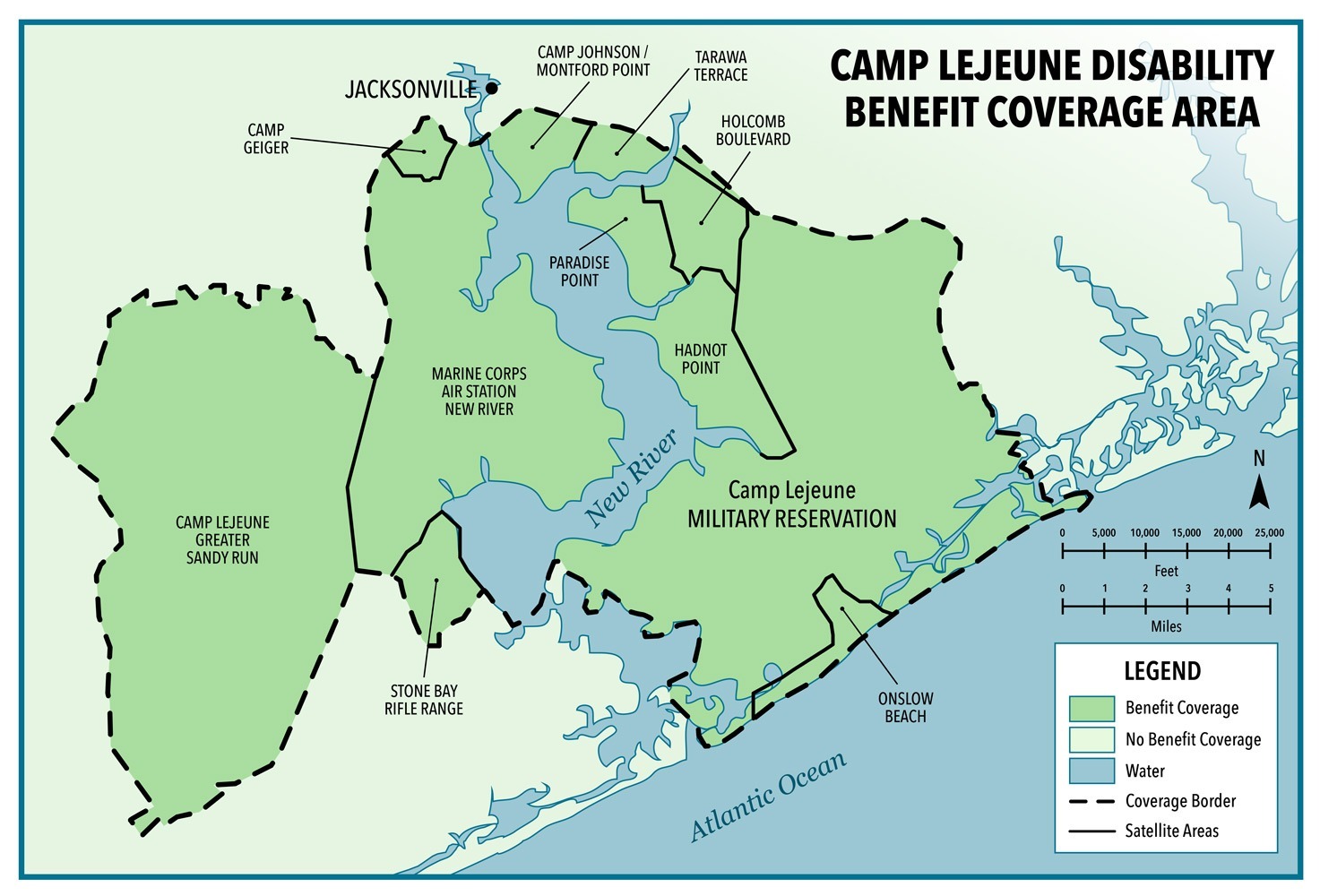
Once the water was finally tested, it was discovered that it contained harmful chemicals, which were – staggeringly – between 240 and 3,400 times the current recognised safe levels.
Among the over seventy harmful chemicals found in the water were the degreaser trichloroethylene and the dry-cleaning solvent perchloroethylene, two of the primary pollutant chemicals discovered in two of the base’s eight water wells
As a result, many of the people (including service personnel and their dependents) who were based at the Camp Lejeune base later developed cancers or other health issues as a result of the contaminated water – including kidney cancer, bladder cancer, non-Hodgkin’s lymphoma, Parkinson’s disease, and multiple myeloma.
Camp Lejeune Lawsuits
Those who developed health problems after being exposed to the contaminated water claim that the USMC was aware of the contamination; concealing knowledge of it and not taking the correct action to resolve the issue.
Therefore, a huge number of victims have been filing Camp Lejeune lawsuits to pursue compensation. While the US government recently announced it was allocating $2 billion to compensate victims, a range of legal professionals and potential victims do not believe this goes far enough.
Therefore, many victims are choosing to file lawsuits rather than choosing to settle in the hope of gaining a compensatory remedy that is more representative.
Explaining the Camp Lejeune Lawsuit Process
If you – or a loved one – fell ill with one of the recognised health issues caused by the water contamination after being based at Camp Lejeune, you may be entitled to either receive a settlement amount or pursue a lawsuit.
When choosing the latter as the route to take, it is crucial that you understand how the lawsuit process works. With this in mind, below are four critical aspects of the legal journey that you need to know about.
1. Hiring a Lawyer
The first step in initiating Camp Lejeune lawsuits – to receive compensation for the health issues caused by the toxic water contamination – is to secure professional legal representation.
A lawyer with experience handling similar cases can provide invaluable guidance and support throughout the duration of your lawsuit.
Therefore, it is advised to look for an experienced, skilful, and friendly lawyer who is already involved in Camp Lejeune water contamination lawsuits.
2. Filing a Claim with a Governmental Department
Once suitable representation is secured, the next task is to file a claim with the appropriate government department – and your experienced lawyer will have full knowledge of how to file your claim and which department to file it with.
This process requires considerable paperwork, including providing medical records that prove a cancer diagnosis or another severe health issue is directly related to the chemical exposure at Camp Lejeune.
3. Filing a Civil Lawsuit
Depending on your circumstances, filing a civil lawsuit may be warranted. This action seeks to bring the responsible parties to account for their negligence or wrongdoing. When you choose to follow this route, your attorney will prepare the necessary legal documents, submit them to the court, and represent your case during subsequent court proceedings.
4. Joining a Multi-District Litigation
Lastly, there may be an opportunity for you to join a multi-district litigation (MDL). A MDL consolidates similar lawsuits into one, and where a single judge manages the pretrial phase. This method can enhance efficiency if an MDL is already in place in your locality. Your lawyer can help you to determine if joining an MDL would be beneficial for your specific circumstances.


 Boot Camp & Military Fitness Institute